The foreplay question nobody asks
Most couples don't talk about how to actually use a vibrator together. They know it exists, maybe they've bought one, but the moment before it shows up in the bedroom is weirdly silent. That gap between knowing and doing is where a lot of good sex gets lost.
Here's what I know from years of couples work: a lemon vibrator isn't something that happens to you during foreplay. It's something you build into foreplay intentionally. The difference between those two approaches is the difference between novelty and sustained arousal.
Why vibrator foreplay changes everything
Traditional foreplay follows a script most of us learned implicitly: kissing, touching, oral sex, then penetration or the main event. It's timed loosely and assumes arousal climbs in a straight line. For many people, it does not.
A lemon clitoral vibrator interrupts that script in a useful way. It separates clitoral stimulation from everything else, which means you can layer sensations. Your partner can use touch, their mouth, or movement on the rest of your body while the lemon does precision work on the clitoris. That's not efficiency. That's orchestration.
The suction-based design of a lemon vibrator (different from traditional vibrators) creates a different kind of stimulation. It feels less like buzzing and more like a gentle drawing sensation. That matters for foreplay because it doesn't numb the area the way some vibrations do. You stay sensitive. You can keep escalating.
Starting before the vibrator arrives
The mistake most couples make is pulling out the lemon vibrator when everyone's already half-aroused. By that point, you're switching tools mid-flow. Instead, start without it.
Foreplay that sets up a vibrator well usually runs 15 to 20 minutes. Kissing, touching, whatever feels natural. But stay intentional about touch. Move slowly. Notice what builds tension in your partner's body. Watch for where they lean into your hands. This isn't wasted time before the "real" foreplay. This is the foundation.
During this phase, talk out loud, even briefly. "I want to use the lemon on you in a minute, but first I want to get you close." Not performance-speak. Just information. It gives your partner's nervous system time to adjust to the idea.
Introducing the lemon into established arousal
The moment to introduce a lemon vibrator is when you've built enough arousal that your partner's body is responding clearly. They're breathing differently. There's lubrication. Their legs are already parting.
If you're the one with the clitoris, you can pick it up yourself and start on a low setting (usually 1 or 2). If your partner is using it on you, let them set it down gently on the external area first. Don't go straight to the clitoris itself unless you're already very aroused. Start on the mons or the outer lips where sensation is slightly less intense.
The lemon works best with lubricant. Water-based lube lets the suction seal better and feels smoother. Apply some directly to the toy or to the skin, then turn it on. Start low. You can always increase. You can't unscare sensitive tissue.
The pacing game: building tension over time
This is where patience changes everything. Instead of going from zero to full intensity immediately, build in cycles.
Cycle one: low intensity (settings 1-2) for 2-3 minutes. Notice how the sensation deepens as arousal increases. Often people report that the same setting feels stronger as they get more turned on. Let your brain register what's happening.
Cycle two: turn it off. Your partner returns to hands, mouth, body contact for another minute or two. The absence of vibration after a few minutes of it creates a contrast. It heightens sensitivity when the lemon comes back.
Cycle three: increase to settings 3-4 for 2-3 minutes. The nervous system now registers this as notably stronger because of the contrast. Arousal typically deepens faster the second time.
Repeat this cycle 2-3 more times, gradually climbing intensity, but never rushing. Real orgasms built this way tend to be more intense and more satisfying than ones that spike immediately. You're also training your nervous system to stay with sensation instead of chasing the finish line.
If you're the partner using the lemon on someone else, pay attention to their body. Are they moving toward the vibrator or away? Is their breathing steady or ragged? Small adjustments in angle or pressure often matter more than intensity.
Communication that doesn't kill the mood
Talking during sex feels awkward until it becomes normal. Then it becomes essential.
Before you start: "Tell me if you want me to slow down, speed up, or change the angle. You can just say it." That removes the need for elaborate hand signals and makes feedback feel practical, not clinical.
During: short checks. "How's this?" "Want me to go higher?" These are 2-3 second interruptions that actually deepen arousal because they prove you're paying attention.
If something isn't working: "That's not it for me right now" is complete information. It doesn't require analysis or reassurance. Your partner adjusts. That's partnership.
When one person prefers slower than the other
Often in couples, one partner gets turned on faster. The other needs more time. A vibrator amplifies this mismatch if you're not careful.
The solution isn't to rush the slower partner. It's to give the faster partner something to do during extended foreplay. While you're spending 20 minutes building arousal for your partner, maybe they're using the lemon on you, or you're using it on yourself while they touch you. Parallel pleasure. Everyone gets what they need. Nobody's bored waiting for the other person to arrive.

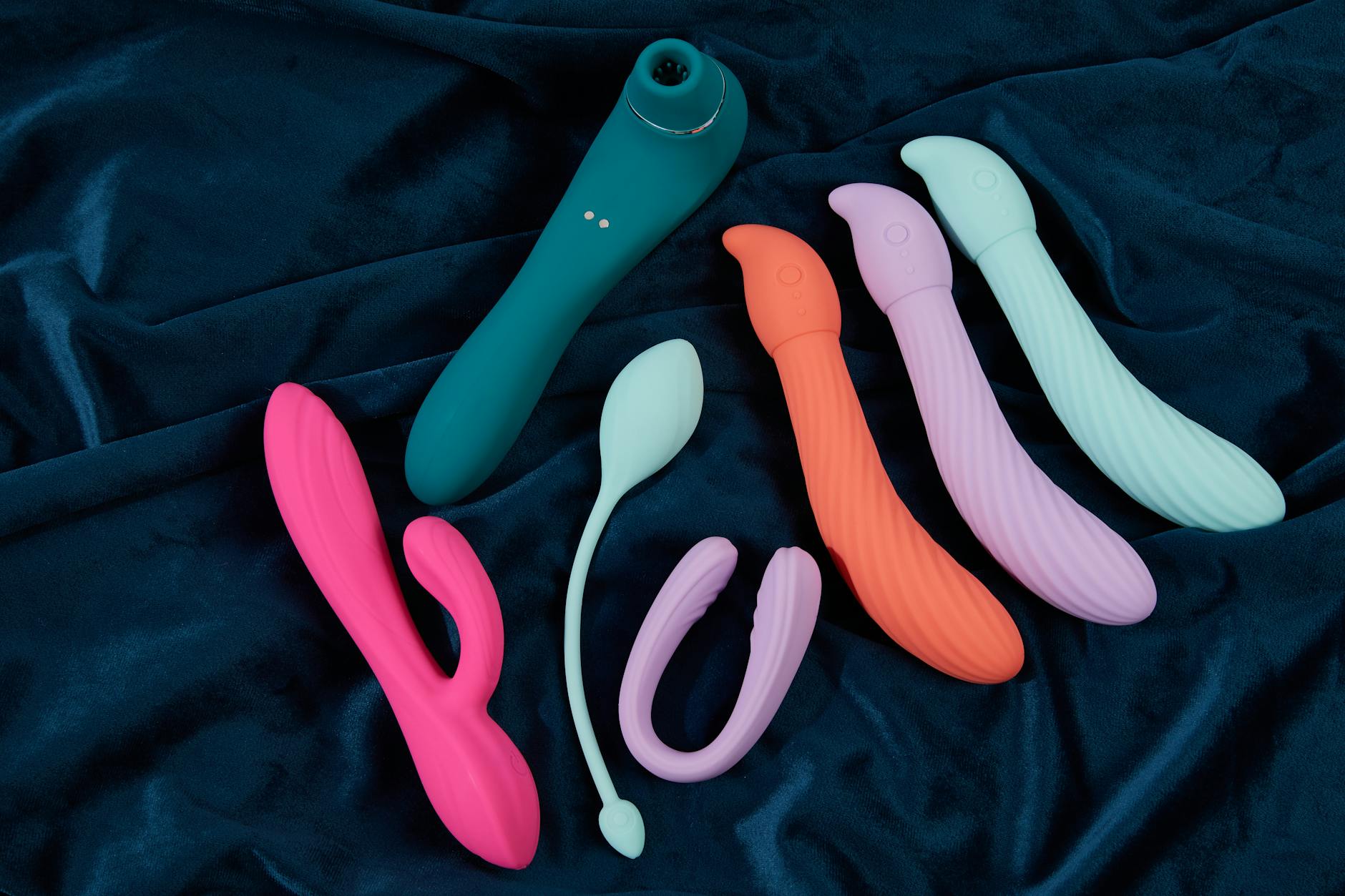
Photo by cottonbro studio on Pexels
The role of the lemon in different foreplay styles
If you tend toward fast, intense sex: use the lemon early and keep intensity climbing. The vibrator becomes a tool for reaching high arousal quickly, then the rest of foreplay is integration and deepening.
If you tend toward slow, sensual sex: the lemon becomes a way to stay engaged while you're taking your time. Low settings, longer cycles, more breaks. You're using it as part of a longer sensual arc rather than a shortcut to intensity.
If you're exploring new territory with a partner: the lemon gives you something concrete to do together, which can ease some of the awkwardness. You're not just figuring out how to touch each other. You're learning a toy together. That's a frame that feels less like performance.
Intensity and the sensitive clitoris
Some clitorises are genuinely sensitive. High intensity on a lemon vibrator can feel sharp instead of pleasurable if arousal isn't high enough, or if the setting jumps too fast.
If you notice yourself flinching or moving away: lower the setting. Seriously. There's no prize for using maximum intensity. A lemon clitoral vibrator on settings 1 and 2 is often exactly right for extended foreplay. You stay engaged longer. Sensation doesn't numb as fast.
If your partner has sensitive tissue, ask what intensity range works. Some people know it instantly. Others figure it out during the experience. Both are fine. You're learning each other's bodies.
Foreplay that builds to orgasm vs. foreplay that stops short
Sometimes you use a lemon vibrator during foreplay and keep going to penetration or another activity. Sometimes the vibrator is the main event and foreplay leads into continued vibrator use until orgasm.
Both are valid. The difference is mostly about communication and intention.
If foreplay is building toward something else: "I want to keep going with the lemon for a while, then switch to you inside me" signals what's coming. Your partner can adjust their pacing accordingly. They won't assume the vibrator is the finish line.
If the vibrator is the main event: that's also worth saying. "Let me come on the lemon" removes guesswork. It gives your partner permission to relax, to stay present, to not wonder if they're doing something wrong.
When to stop
This sounds obvious but it's actually the part most people fumble. You build arousal, use the vibrator, and then someone panics about whether it's time to switch.
If you're approaching orgasm and want to stay with the lemon: keep the intensity steady and signal that you're close. Your partner keeps doing what they're doing.
If you want to switch to something else: pull the vibrator away gently and say what you want next. "I want you inside me now" or "I want your mouth on me."
If you need a break: stop. Take a breath. Drink water. Talk for 30 seconds. The hottest foreplay includes rest. Your nervous system needs it to stay engaged.
If arousal's dropped and you want to rebuild instead of finishing: "Let me take a break and then we can go again" is all you need. No explanation required.
Foreplay frequency and how vibrators fit
Couples who report the most satisfying sex life typically have foreplay that lasts 20 to 30 minutes on average. Most reported average is closer to 5 to 10. That gap is real and worth closing.
Using a lemon vibrator as part of foreplay often naturally extends that time because you've introduced an element that needs pacing. You can't rush it. The tool itself enforces slowness in a good way.
Over time, partners often report that incorporating vibrator foreplay changes the entire sexual rhythm in their relationship. Sex gets longer, more connected, and more satisfying. That's not because the vibrator is magic. It's because you've finally built in the time for arousal to actually develop.
FAQ: Foreplay, vibrators, and partnered pleasure
How do I know when my partner is ready for the lemon vibrator during foreplay?
Look for clear physical signs: lubrication, deepened breathing, responsiveness to touch, and body movement toward your hands. You can also just ask. "Want me to use the lemon on you?" takes about two seconds and gives clear information. Arousal isn't subtle. If someone is ready, their body shows it.
What if I want to use a vibrator on my partner but they seem nervous?
Nervousness usually means you need more foreplay before the toy shows up, not less. Spend extra time with hands and mouth. Build their confidence in the experience of being touched. Then introduce the idea verbally before you introduce the toy physically. "I want to try something that I think you'll really like. Can I?" That small permission moment matters.
Can we use a lemon vibrator with both partners at the same time during foreplay?
Yes. One partner can use the lemon on the other while receiving touch. Or you can trade off. Some couples use vibrators on each other simultaneously. The key is clear communication about what you're each doing and what you want. Parallel pleasure is very real.
How do I avoid the vibrator becoming the only thing we use?
This is a real risk. The solution is intentionality. Some foreplay uses the vibrator, some doesn't. Alternate. Some sessions feature the lemon, others focus on hands, mouth, and body contact. Variety prevents any single tool from becoming a crutch. It also keeps sex from becoming predictable.
What if one partner likes vibrator foreplay and the other doesn't?
Compromise is key but not always the answer. Instead, think about integration. Maybe the partner who loves the vibrator uses it on themselves while the other partner focuses on touch. Or you use it as part of foreplay sometimes, and skip it other times. The goal isn't to make everyone love the same thing. It's to create space where both needs get met.
Does using a vibrator during foreplay mean we're skipping "real" foreplay?
No. A lemon vibrator is part of foreplay, not a replacement for it. The best partnered sex using vibrators still includes hands, mouths, and time. The vibrator just adds a specific type of stimulation. You're adding to the experience, not replacing it.
Building foreplay that works for both of you
Foreplay with a vibrator isn't more complicated than foreplay without one. It's just more intentional. You're thinking about pacing, about communication, about how to build arousal in layers instead of all at once.
Start slow. Talk before you start, check in while you're going, and stay present with what your partner's body is telling you. The lemon vibrator is a tool that works best when it's part of a larger conversation you're having with your partner about pleasure, time, and connection.
If you're ready to try this with a partner, start with the conversation. "I've been thinking about extending foreplay" or "I want to try using a vibrator together" opens the door. Then let the experience unfold at whatever pace feels right. Your body knows what it needs. Your partner's does too. The vibrator is just there to help you both listen.