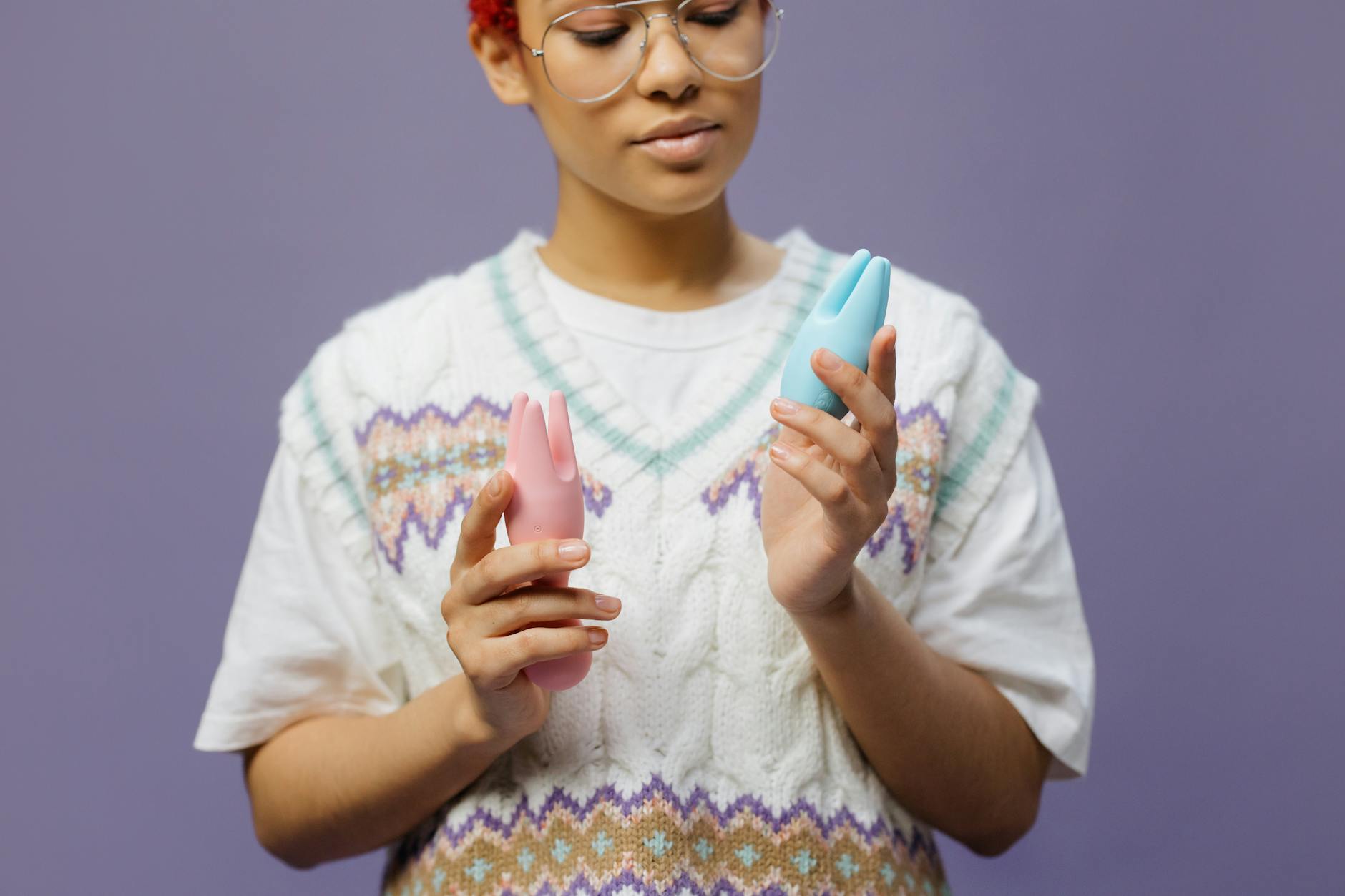
If you've spent a decade or more having sex primarily with a partner, solo pleasure doesn't feel like a return to something. It feels like learning a different language. Your body responds differently when no one's watching. Your brain stops narrating what you "should" be feeling. And a lemon vibrator suddenly becomes less of a novelty and more of a mirror.
I work with a lot of people in their 30s, 40s, and 50s who come back to solo practice after years of partnership. What they report most often isn't shame or awkwardness. It's surprise at how foreign their own pleasure feels.
When you've been having sex with someone else, your nervous system calibrates around them. You're reading their responses, managing their pleasure, timing things to their rhythm. Even if you're not consciously thinking about it, your body is. This is called responsive desire, and it's completely normal. But it means your own desire pathways have been running through someone else's experience as the central reference point.
When you're alone, there's no external feedback. No partner's arousal timeline. No one's satisfaction but yours. For people who've organized their sexuality around partnership for years, this can feel weirdly claustrophobic at first. Too much freedom. No goalpost.
Then there's the physical difference. Your clitoris responds differently when you're not partly focused on someone else's pleasure. Blood flow comes more fully into your own tissue. Orgasms often feel sharper, longer, and sometimes surprisingly intense. People tell me they've had their strongest orgasms solo after years of mediocre partnered sex. This isn't unusual. It's actually the norm once you stop splitting your attention.
The biggest mistake I see is people approaching solo sex with a performance mentality. They bring the old partnered script. They expect it to unfold the same way. Orgasm in 15 minutes. A specific sequence of sensations. Orgasm as the finish line.
That script won't work alone. And it doesn't need to.
When you're actually alone, give yourself permission to be bored. To explore something for 30 seconds and stop. To come back to the same movement 20 times. To orgasm and then keep going. To not orgasm at all and still call it pleasure.
This is the mental reset that changes everything. You're not performing for a partner or even for a fantasy version of yourself. You're experimenting with what your actual body likes right now, on this day, in this moment.
Pick a time when your brain is quiet. Not rushed. Not thinking about three other things. Solo pleasure requires attention, and your own attention matters most. Twenty minutes when you're actually present beats an hour when you're not.
Understand your privacy. This sounds obvious, but I mention it because it changes everything neurologically. If you're half-listening for a knock or worried someone will walk in, your nervous system is still in a shared space. You need genuine privacy to drop into your own pleasure.
Forget the porn script. If you learned solo sex from pornography, you're watching a performance designed for an audience. Real solo pleasure looks different. It's slower, sometimes quieter, less linear. It meanders. Give yourself permission for that.
Clitoral vibrators like the lemon vibrator work differently in solo practice than they do with a partner. When someone else is holding a toy, there's often a power dynamic (even a subtle one). They control rhythm, speed, placement. Alone, you have complete control, and your body responds to that differently.
Start with the lemon vibrator on the lowest pattern. Many people coming back to toys after partnered years overestimate what intensity they need. Lower settings actually allow for more nuance and sustained pleasure because they don't fatigue the tissue.
Pay attention to what happens when you vary the pressure. Not every stroke needs to be directly on your clitoris. Your clitoral network extends further than people realize. The lemon sucker design of the lemon vibrator works particularly well solo because you can adjust suction pressure with your hand position. You're the one controlling intensity moment to moment.
When you've been having partnered sex, your arousal timeline is often compressed. Someone else is ready, so you compress yourself to match. Solo, you get to see what your actual timeline looks like without external pressure.
You might find you need 25 minutes of foreplay before you're ready for direct stimulation. Or you might find that your pleasure builds slower when there's no external stimulus driving it. Both are fine. This is information. You're learning something about yourself that you can then communicate to a partner if and when you want to.
Many people find that their first few solo sessions with a vibrator don't lead to orgasm. That's completely normal. You're rewiring your nervous system back to solo arousal. It usually takes 3-5 sessions before your body remembers how to fully let go alone.
Here's what people often don't realize: the reason solo pleasure feels foreign after years of partnership isn't usually physical. It's psychological. You've internalized that your sexuality exists primarily to be shared. That solo sex is a consolation prize or a maintenance task.
It's actually the opposite. Your solo practice is where you learn what you genuinely like, untouched by someone else's preferences or timeline. Then you bring that knowledge to partnership if you want to. People who have a strong solo practice report better partnered sex. Not because they're more skilled. But because they know themselves.
Using a lemon vibrator alone isn't filling a gap. It's building a foundation.
If you're in a partnered relationship, solo exploration doesn't compete with partnered sex. It complements it. I generally suggest solo sessions 2-3 times a week if you're also having partnered sex, but honestly, that's individual.
The key is that your partner understands it's not about them. It's about you maintaining connection with your own pleasure system. People in long partnerships often lose track of solo arousal entirely. Then when partnered sex feels stale, they blame the relationship instead of recognizing that their own pleasure practice has gone dormant.
Solo pleasure is maintenance. It's also pleasure. It's also useful data about what your body needs.
Completely. Your nervous system is fully in your own experience. There's no divided attention. There's also often less performance pressure, which means your body relaxes more fully. If you're consistently having stronger orgasms solo, that's data worth exploring with a partner if you have one. It might mean you need different stimulation, different timing, or different conditions than what currently happens during partnered sex.
For most people, 3-4 sessions. Your nervous system needs a few reps to remember that solo pleasure is normal and good. If it's still feeling awkward after 8-10 sessions, it might be worth exploring whether there's underlying guilt or shame worth looking at. Sometimes that comes from religious messaging, sometimes from a partner's discomfort, sometimes from internalized ideas about what sexuality "should" look like.
Yes, and I'd actually encourage it. Many people use vibrators passively with a partner (letting someone else control it) and actively alone (holding it themselves and adjusting pressure). This can feel wildly different. You might find you prefer patterns you'd never choose with a partner, or that you like to move the toy yourself rather than keep it in one place.
First, that's not a problem to solve immediately. Some people need multiple sessions to build arousal when there's no external partner providing stimulus. Second, not every solo session needs to lead to orgasm. Pleasure without orgasm is still pleasure. Third, if you've never orgasmed solo in your life, it can take patience and the right conditions. A quiet environment, genuine privacy, low pressure, and time usually help more than a better toy.
Totally up to you. Some people like the separation because solo and partnered sex can feel like different practices. Others like having one toy they know well. If you're sharing with a partner, make sure it's something you both enjoy using. Your solo tool shouldn't feel like something you're giving up for partnership.
Direct conversation usually works better than leaving it implied. Something like: "I'm exploring solo pleasure to understand my body better. It's for me, not instead of us." Most partners actually appreciate this because it takes pressure off them to be your only source of arousal and pleasure. If a partner resists your solo practice, that's information worth exploring separately.
Solo pleasure after years of partnership isn't about rebuilding something you've lost. It's about building something new. You're older. Your body has changed. Your preferences have changed. You're not the person you were when you first started having partnered sex.
A lemon vibrator is just a tool. The real work is giving yourself permission to explore your own pleasure as a priority, not a side project. Once you do that, everything shifts. You stop performing. You stop rushing. You start actually feeling what feels good.
That's when partnered sex gets better too. Not because you're more skilled. But because you know yourself. And that's the sexiest thing anyone can bring to anything.