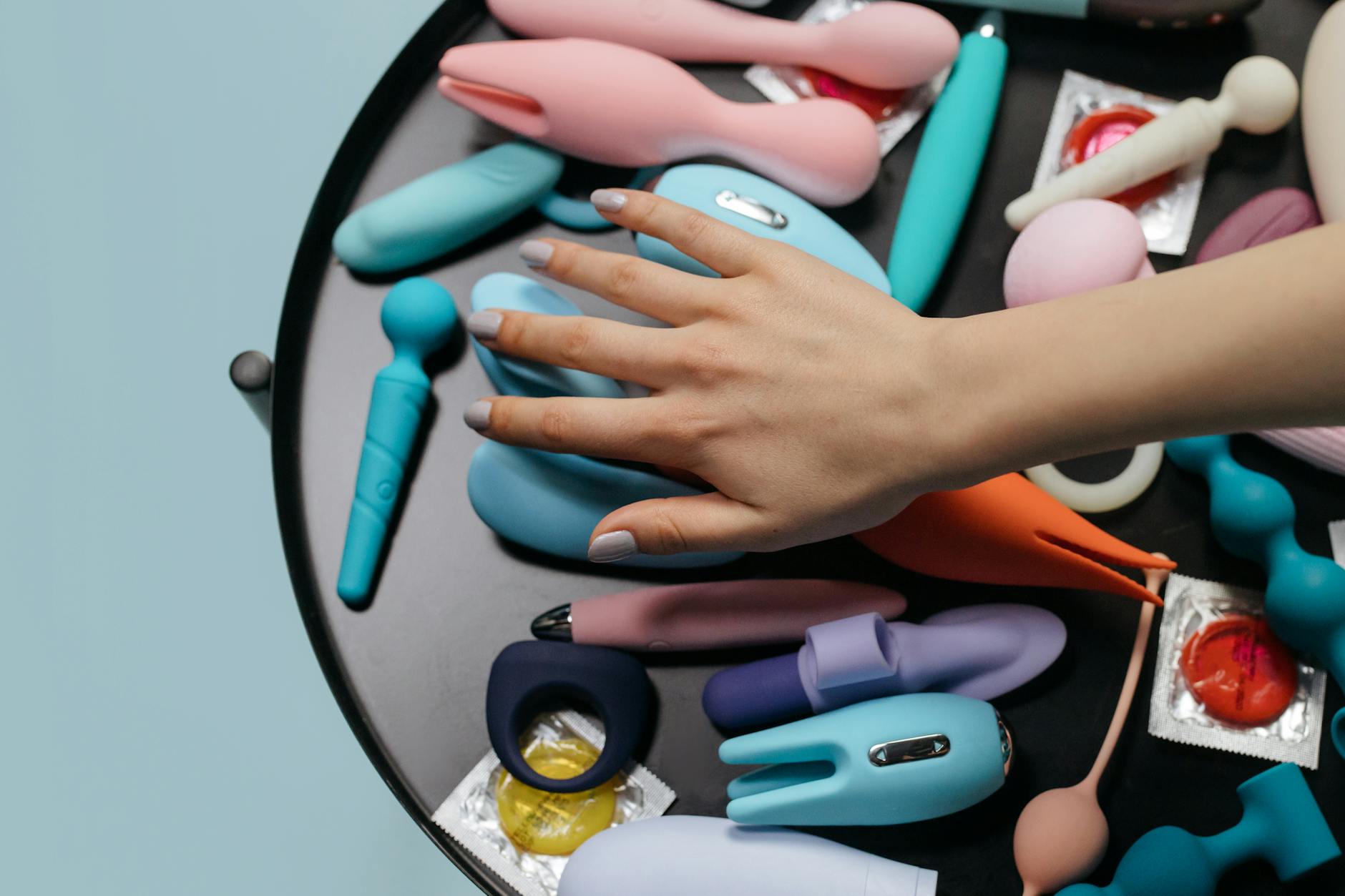
Let's be real about slow arousal
Arousal used to be fast. Then it wasn't. And now you're staring at your partner wondering what changed, or worse, wondering if something's wrong with you.
Here's the thing: nothing's broken. Arousal naturally slows at different life stages, under stress, during hormonal shifts, and honestly, just because your nervous system learned to be cautious. The speed of arousal isn't fixed. It's a dial, and right now yours is turned down. That's not a failure. It's data.
Lemon vibrators, especially the Lem design with its suction-based stimulation, work exceptionally well for slower arousal because they engage your nervous system differently than older clitoral vibrator designs. They bypass the need for fast-building friction and instead create a sustained sensation that your body can sink into at its own pace.
Why arousal slows down in the first place
There are usually three culprits working together, not one villain acting alone.
Stress and nervous system fatigue. When your life is running hot, your parasympathetic nervous system (the one that switches on pleasure) gets deprioritized. Your body is literally in alert mode. Arousal requires the opposite. You need your nervous system to feel safe enough to drop into sensation.
Hormonal and physiological shifts. Estrogen, testosterone, thyroid function, and even cortisol levels influence how quickly blood flows to the genitals and how sensitive nerve endings feel. These aren't personality problems. They're biochemistry.
Expectation and performance pressure. Once you notice arousal is slower, you often start pushing harder to feel what you used to feel. This backfires completely. Anxiety about arousal kills arousal faster than anything else.
The good news: slowing down isn't a door closing. It's an invitation to explore a different kind of pleasure.
How lemon clitoral vibrators fit this specific challenge
Most traditional vibrators rely on rapid oscillation. They work great if arousal is already climbing. But if you need time to wake up, they can feel too intense, too urgent, or even numb.
Lem vibrators use a different mechanism: gentle suction and pulsing patterns that feel more like sustained stimulation than vibration. This matters because sustained sensation is easier for your nervous system to register and respond to when arousal is slow.
Think of it this way. A jackhammer gets attention fast. A slow, deep massage gets your whole nervous system to relax and engage. That's the difference.
With slower arousal, your body benefits from time to build baseline sensation before intensity ramps up. Lemon sexual toys designed with this mechanism don't demand a specific arousal speed. They meet you where you are.
The setup that actually works
Timing and environment matter more than you probably think.
Give yourself permission to warm up slowly. This means 20-40 minutes of foreplay or solo time without a deadline. Not because you're "broken" and need extra time to "fix" yourself, but because slow arousal deserves space. Rushing it is like trying to fall asleep by forcing your eyes shut. The harder you push, the further it goes.
Remove urgency from the equation. If there's an internal clock ("we have 45 minutes before the kids wake up" or "I should feel something by now"), arousal will slow even further. This is the nervous system protecting itself. Instead, tell yourself and your partner: "This is going to take the time it takes. That's the plan."
Start non-genitally. Hands, lips, skin-to-skin contact on thighs, neck, chest. Let your nervous system register safety and pleasure before moving to more direct stimulation. This isn't a delay tactic. It's the foundation that slower arousal actually needs.
Once you feel baseline sensations building, that's when a lemon clitoral vibrator enters the picture.
How to actually use the Lem when arousal is slow
Start at the lowest pattern and setting. This isn't a compromise. Low settings on lemon adult toys are designed to stimulate without overwhelming, which is exactly what slower arousal needs.
Place it against your clitoris and let it sit there for 30-60 seconds before adjusting anything. You're not hunting for a sensation. You're waiting for your nervous system to register it and respond. This feels passive, but it's the opposite. You're actively learning how your body wants to engage.
If you have a partner, this is also where communication matters. They're not here to "speed things up." They're here to create safety and presence while you explore your own pace. That might mean they're touching you elsewhere, or just being close, or even just being present in the room. Different for different moments.
Gradually, as you feel sensations building, you can shift to slightly higher patterns. The key word is gradually. You're not chasing intensity. You're following what feels good as it unfolds.
Many people find that when they stop fighting slow arousal and instead work with it, pleasure actually becomes deeper and more satisfying. This isn't consolation-prize language. It's what happens when you stop performing arousal and start actually experiencing it.
When arousal is slow with a partner
This is where a lot of couples get stuck. One person is aroused and ready. The other is still warming up. The faster person feels rejected. The slower person feels pressured. Both feel disconnected.
Here's how to reframe it: your partner's slower arousal isn't a rejection of them or a problem to solve. It's information. And lemon clitoral vibrators actually solve this particular dynamic beautifully.
While your partner uses the Lem to build their own arousal at their own pace, you have options. You can engage in other foreplay, use your own stimulation, or simply be present together. The vibrator becomes a tool that lets both people's arousal happen simultaneously instead of one person waiting for the other.
This also removes the pressure on your partner to perform arousal on someone else's timeline, which paradoxically usually makes arousal faster and easier.
The mental shift that changes everything
Slower arousal only becomes a problem when you decide it is one.
If you're comparing your current arousal speed to your past arousal speed and feeling like you've lost something, that story will slow things down further. Nervous systems respond to stories we tell. Tell yourself "I'm broken" and your body will believe it.
Instead, try this: "My arousal has changed. I'm learning how it works now. That's actually interesting."
This isn't positive thinking. It's radical honesty. Your arousal did change. And now you get to discover what this version of your pleasure is capable of. Sometimes it's deeper. Sometimes it's different. Almost always, it's worth exploring.
What not to do
Don't use faster patterns hoping intensity will kickstart arousal. It usually does the opposite. Don't skip foreplay and jump straight to the toy. Don't pressure yourself to feel something by a certain point. And don't assume that slow arousal means low pleasure. Some of the most satisfying sexual experiences happen at slower speeds.
Also don't assume this is permanent. Arousal can shift again with stress relief, hormonal changes, relationship reconnection, or just time. But while you're in this phase, work with it instead of against it.
People also ask
Why does my arousal feel slower than it used to?
Arousal speed is influenced by stress levels, hormonal fluctuations, life transitions, relationship dynamics, medications, and sometimes just nervous system fatigue. It's also normal for arousal to shift across the lifespan. This doesn't mean your capacity for pleasure has changed. It means your body's path to pleasure might look different now.
Can a lemon vibrator actually help with slow arousal?
Yes. Lemon clitoral vibrators use sustained suction-based stimulation rather than rapid vibration, which means they don't demand that your body be already aroused to feel something. They work well for building arousal gradually because they provide constant feedback to your nervous system without the intensity that can backfire when arousal is slow.
How long should I use the vibrator if arousal is slow?
There's no time limit. Use it for as long as it feels good. Some people find that 5-10 minutes of consistent low-level stimulation is all they need. Others prefer 20-30 minutes of gradual build. The point is to stop thinking of "time spent" as a measure of success. Your arousal will reach its own natural peak whenever that is.
Is it normal to need a toy to build arousal when I didn't before?
Completely normal. Our bodies change. That doesn't mean you're dependent on toys. It means your nervous system might respond better to external stimulation at this point in your life. This is actually true of a lot of people at different ages. Many couples find that adding toys to their routine improves pleasure for both partners regardless of whether one person's arousal shifted.
Should I be embarrassed about slower arousal?
No. Slower arousal is one of the most common shifts people experience, and it's rarely discussed honestly because of exactly this shame. There's nothing to be embarrassed about. Your body is communicating something about what it needs. Listening to that is wisdom, not weakness.
Does slow arousal mean something's wrong with my relationship?
Not necessarily. Sometimes relationship stress slows arousal. But often, slower arousal is just about physiology, stress, or life phase, and has nothing to do with how you feel about your partner. The best way to know is to check in with yourself and your partner separately about what's actually going on. Then you can address whatever the real issue is, instead of assuming arousal speed is the whole story.
The real shift
Slower arousal isn't a problem to fix. It's an invitation to explore pleasure differently. Once you stop fighting it and start working with it, you often find that your sexual experiences become deeper, more intentional, and paradoxically more satisfying.
A lemon vibrator is a tool that makes this exploration easier. But the real work is learning to trust your body's pace and building the conditions where that pace can unfold. That looks different for everyone. The key is finding what works for you, not what worked before.
If you're navigating this shift with a partner, this is also an opportunity to rebuild intimacy and communication around pleasure. That alone often changes everything.
Ready to explore? Start with patience, remove the pressure, and give yourself permission to discover what your slower arousal is actually capable of. You might surprise yourself.