Let's start with what feels counterintuitive
Most people assume pleasure fades with age. The opposite often happens. Your clitoris doesn't wear out. It gets smarter. With decades of data about what works and what doesn't, your body knows exactly what it wants. The problem is that increased clitoral sensitivity—which is genuinely common in your 40s, 50s, and beyond—can turn your favorite technique into something that feels too intense, even overwhelming.
I talk to people all the time who say, "I used to love direct vibration, and now it's almost painful." That's not a sign something's broken. It's a signal that your nervous system is being more efficient. And it changes how you use a lemon vibrator.
Why sensitivity actually increases
Three things happen as you age that shift your clitoral response. First, your skin thins slightly everywhere, including the vulva. That means nerve endings sit closer to the surface. Second, your body becomes more efficient at blood flow during arousal. Less warm-up time, faster response. Third—and this is the big one—you've typically spent decades learning your own body. Anticipation itself becomes a form of stimulation.
The result is that direct contact, especially at higher intensities, can feel sharp or even painful instead of pleasurable. This isn't dysfunction. It's precision.
The technique shift: from direct to diffused
With a younger nervous system, many people use lemon vibrators—which deliver concentrated suction—directly on the clitoris at maximum intensity. That works fine when you need more to feel anything. When sensitivity rises, that same approach becomes too much.
Here's what changes:
1. Add a layer. Use the vibrator through a thin fabric. A cotton underwear crotch, a silk slip, even a microfiber towel softens the sensation without killing the stimulation. You still get the suction and the vibration, but it's muffled enough to feel good instead of overwhelming.
2. Start two levels lower than you think you need. If you used to start at pattern 5 or 6, try 3. Sit with it there for two minutes. Your body will often surprise you. Increased sensitivity means you'll reach intensity faster than you expect. You're not losing sensation. You're becoming more responsive.
3. Move the contact point. Instead of holding the lemon vibrator directly on the clitoral glans, angle it slightly to one side or position it over the clitoral hood. You're still stimulating the same nerve cluster, but from a slightly different angle that feels less intense. Many people find this shift alone transforms the experience.
4. Use longer cycles. Instead of 15-minute sessions, give yourself 30-40 minutes. Build arousal slowly. With increased sensitivity, the nervous system often needs more time to fully relax into pleasure, even though it responds faster to initial stimulation. That sounds contradictory, but it's real. The acceleration is in the response. The depth is in the pacing.
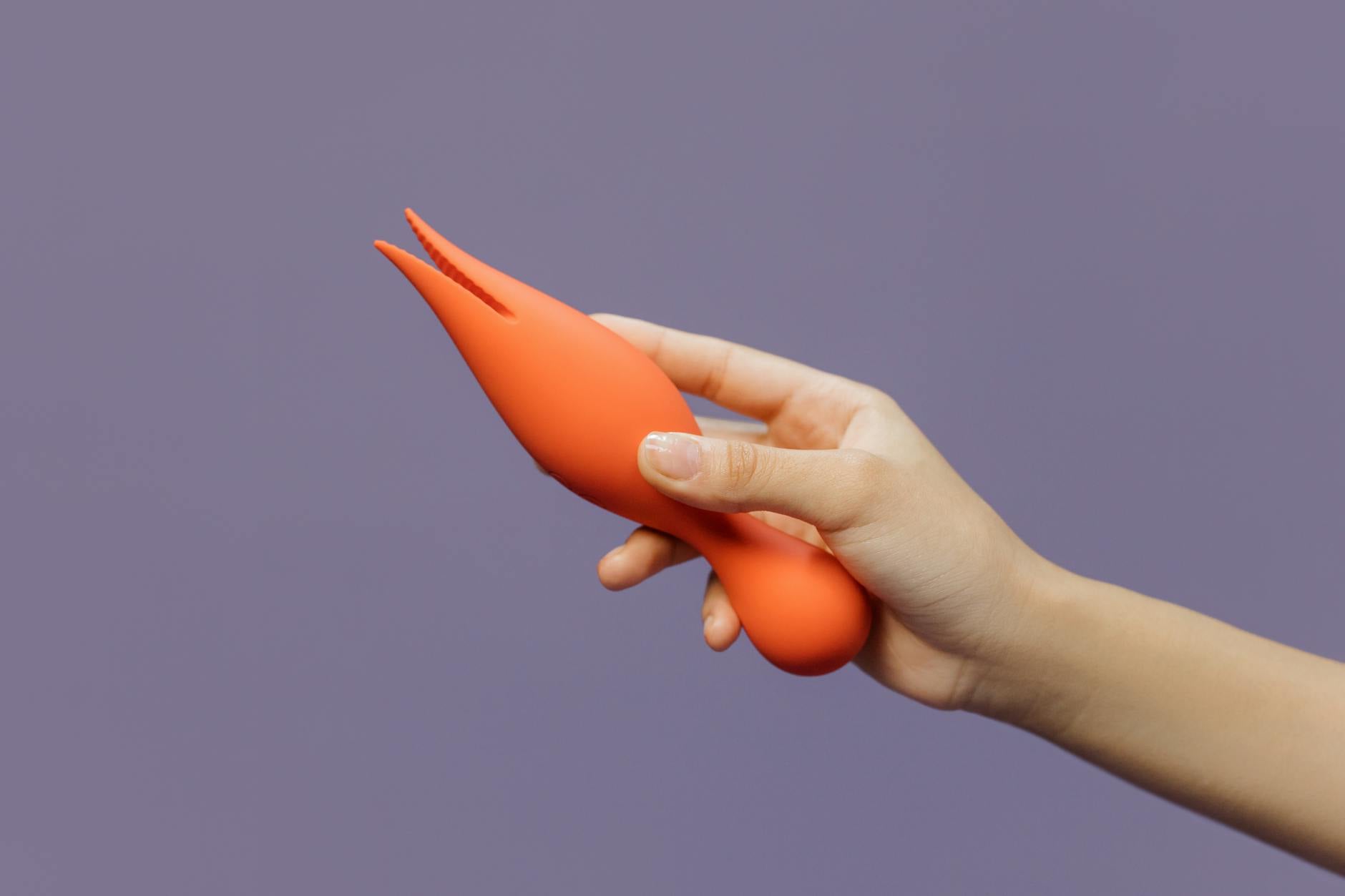
Photo by cottonbro studio on Pexels
What's different with a partner
If you're using a lemon vibrator with a partner, increased sensitivity changes the dynamics. Direct clitoral vibration during partnered sex—which many people love—can become distracting or uncomfortable. The solution isn't to stop. It's to communicate the shift and adjust timing.
Try using the vibrator before penetration or intercourse, not during. Bring yourself close to orgasm with the vibrator at a lower intensity, then transition to penetration when you're already aroused. This works because your sensitivity doesn't mean you need less stimulation. It means you need less intensity to get the same response, and you need more time for your nervous system to settle between different types of touch.
You might also explore using the lemon vibrator on other areas—the inner labia, the perineum, or the entrance to the vagina. Increased clitoral sensitivity doesn't mean the entire vulva is more sensitive. Often it's concentrated in the glans. Spreading the stimulation around gives you more range.
Speaking of range, read about how to use a lemon vibrator with your fingers for blended orgasms if you want to understand how combining techniques opens up new sensations even when sensitivity shifts.
Lubrication matters more now
With increased sensitivity, friction becomes more noticeable. Even slight dryness can flip stimulation from good to uncomfortable. This has nothing to do with arousal levels. Your body might be fully turned on and still benefit from extra lube.
Use a water-based lubricant every time you use the lemon vibrator, even if you think you don't need it. Silicone lubes feel richer and last longer, but they can damage silicone toys. Stick with water-based. Apply it generously. The goal is smooth, frictionless contact between the vibrator and your skin.
The secondary benefit is that lube creates a slight barrier that diffuses the vibration even more, so you get the sensory shift without having to use a fabric layer.
When intensity actually serves you
Increased sensitivity doesn't mean you never go to higher intensities. It means you use them strategically, not as your baseline. Many people find that once they're deeply aroused—often 20-30 minutes in—higher intensities feel good again, because the nervous system is fully engaged and expecting more stimulus.
Think of it like sound. If a room is quiet and someone plays loud music, it's jarring. If you've been listening to music and it gets louder, you barely notice. Your clitoris works the same way. Context changes everything.
The mental piece nobody talks about
Increased physical sensitivity often comes with increased emotional and cognitive sensitivity. You might find that distraction—a text message, a weird sound, the neighbor's dog—pulls you out of pleasure more easily than it used to. You're not becoming less sexual. You're becoming more focused. Your nervous system is less tolerant of divided attention.
This is actually good news for pleasure. It means you benefit enormously from creating a real environment, not just logistical permission. Dim lights, phone on silent, time blocked off so you're not watching the clock. With a lemon vibrator and increased sensitivity, context becomes part of the tool.
When to recalibrate
Your sensitivity will keep changing. Every five years or so, take an evening to explore your current baseline. What intensity level makes you excited versus what makes you tense? Do you still prefer a fabric layer or has that shifted? Does your preferred pacing look different? This isn't constant recalibration. It's just checking in.
If you notice that sensation suddenly drops off, especially if it's accompanied by pain or significant mood changes, talk to a healthcare provider. Sensitivity fluctuations are normal. Sudden changes sometimes signal something else—hormone shifts, medication effects, or pelvic floor tension—that's worth ruling out.
The best part
Increased sensitivity means you get more pleasure from less effort. Yes, it requires technique adjustments. But the payoff is that you often experience more intense, more frequent orgasms once you learn the new rhythm. You're not working harder. You're working smarter. And your body is finally done pretending it doesn't know what it wants.
FAQ: Sensitivity changes and lemon vibrators
Why does my clitoris feel more sensitive even though I'm aging?
Your clitoris doesn't lose nerve endings as you age. What changes is skin thickness and your nervous system's efficiency. Thinner tissue means nerves sit closer to the surface. More efficient arousal response means your body reacts faster. You're not experiencing decline. You're experiencing precision. Combined with decades of knowing your own body, this often feels like increased sensitivity.
Can I still use high-intensity patterns on my lemon vibrator?
Absolutely. High intensity works best when you're already deeply aroused and your nervous system expects increasing stimulation. Many people find that after 20-30 minutes of lower-intensity use, higher patterns feel great. The key is pacing and context, not avoiding intensity entirely.
Should I use the lemon vibrator less often if sensitivity increases?
No. Frequency doesn't cause increased sensitivity. If anything, regular use keeps nerve pathways active and responsive. If you're experiencing discomfort, the issue is usually intensity, pacing, or lubrication—not frequency.
Does a fabric layer really make a difference with a lemon vibrator?
Yes. A single layer of cotton or microfiber dampens the suction and vibration just enough to feel less intense while preserving the stimulation. Try it for two sessions and compare. Many people find it's the single most effective adjustment.
Is increased sensitivity a sign I should see a doctor?
Increased sensitivity that develops gradually over years is normal. Sudden increases in sensitivity, especially paired with pain or significant mood changes, are worth discussing with a healthcare provider. They can help rule out hormonal shifts, medication effects, or pelvic floor tension.
Can increased sensitivity affect partnered sex?
Yes. Direct clitoral vibration during penetration might become uncomfortable even though you love using the vibrator solo. The fix is timing—use the vibrator before sex rather than during, or explore using it on different areas of the vulva. Increased sensitivity doesn't mean you need less pleasure. It means you need to deliver it differently.
Getting started with the shift
If you've been using your lemon vibrator the same way for years and lately it's felt too intense, start here. Lower your typical intensity by two or three levels. Add a fabric layer. Give yourself more time. Your nervous system isn't broken. It's just more efficient. The lemon vibrator still works. You're just learning to speak its language fluently.