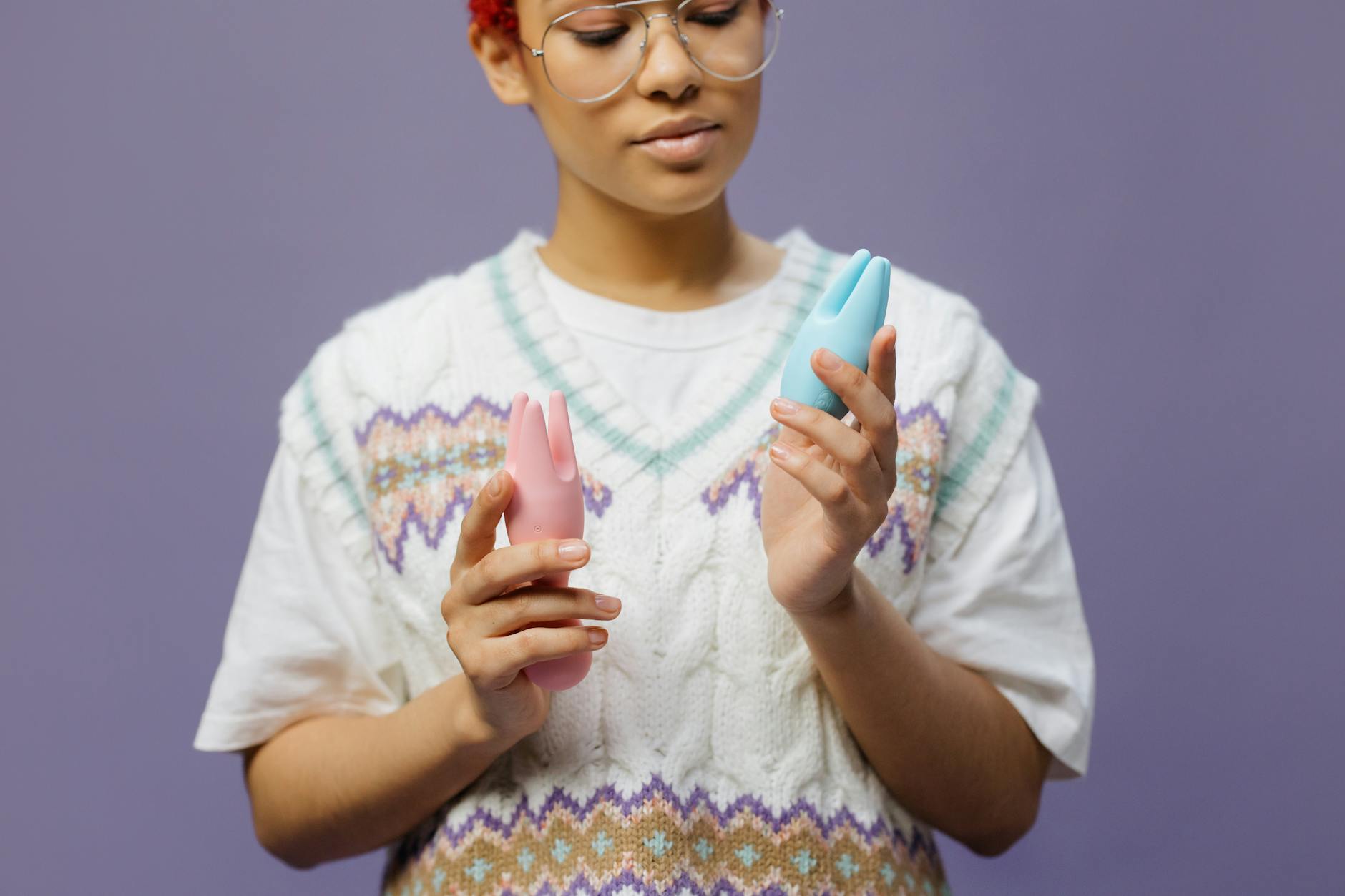
Let's talk about what actually happens to sensation
Menopause doesn't kill pleasure. But it does rewire how your clitoris talks to your brain. Estrogen drops, tissue thins, blood flow changes, and suddenly the things that used to work feel muted, numb, or weirdly intense in a bad way. That's not a character flaw. That's physiology.
Here's the plot twist: a lemon vibrator, specifically a suction-style toy like the Lem, often works better during and after menopause than it did before. Not because you're broken, but because how you respond has genuinely shifted. And when you understand that shift, you can work with it instead of against it.
Why clitoral sensation changes during menopause
Three biological things happen that matter:
First, your clitoris loses some of its protective hood thickness as estrogen drops. That tissue was padded protection. Less estrogen means less padding. Your clitoris is more exposed, which sounds like it should feel more sensitive. It doesn't. Instead, it often feels raw, oversensitive to friction, or numb depending on the day.
Second, blood flow to your clitoris slows down. Arousal normally works like this: blood rushes in, tissue swells, nerves light up. With lower estrogen, that rush takes longer to build and doesn't swell as much. Your clitoris needs more time and more consistent stimulation to "wake up."
Third, your nerve endings haven't gone anywhere. They're the same network they always were. But they're receiving fewer hormonal signals that prime them for pleasure. It's like turning down the volume on the stereo before you even hit play.
The good news: air-suction toys like a lemon clitoral vibrator don't rely on the same nerve pathways as friction-based stimulation. They work differently. And for menopausal bodies, different often means better.
Why suction works better when sensation feels muted
When you use a standard vibrator, you're relying on friction and direct pressure. That works when your clitoris is plump with blood and highly sensitized. During menopause, both of those things are diminished.
A lemon vibrator uses gentle suction to draw blood into the clitoris and stimulate the nerve bundle without the intensity of direct contact. It's less about friction and more about sustained, rhythmic pressure that coaxes the tissue to respond. For many people during menopause, this is exactly what their body needs.
There's a clinical reason for this. The clitoris has about 8,000 nerve endings concentrated in a small space. Friction stimulates them through pressure and movement. Suction stimulates them by creating a gentle pulling sensation that awakens the tissue without overwhelming it. When those nerves are already running quiet due to hormonal changes, suction often feels more accessible.
How to adjust your technique as sensation shifts
Here's what I recommend to people navigating this transition:
Start on the gentlest setting. Don't assume you need more intensity. Many people use patterns 1 through 3 on a lemon vibrator during menopause instead of jumping to 5 or 6. Give your body time to respond. If you find yourself needing to press harder or stay on one pattern for 20+ minutes, drop back to a lower setting and spend more time in warm-up first.
Extend your warm-up window. Before menopause, you might have been ready to go in five minutes. Now budget 15 to 20 minutes of foreplay, fantasy, or simple touch before bringing in a toy. Your clitoris hasn't forgotten how to swell. It just needs a longer runway.
Use lubricant even though you don't think you need it. The suction from a lemon clitoral vibrator creates a seal against your skin. If your vulva is on the drier side (common with hormonal shifts), that seal can feel slightly uncomfortable or even like mild suction burn. Water-based lubricant solves this instantly. You're not being "not enough." You're using the right tool for the job.
Vary the pattern. Sensation can feel inconsistent during menopause. Some days pattern 2 feels amazing. Other days pattern 4 feels better. A lemon vibrator's multiple patterns give you flexibility. Don't get locked into one. Explore what your body wants that particular day.
Pay attention to your cycle, even after periods stop. Hormones don't shut off overnight. For the first year or two of menopause, your body still has hormonal fluctuations, just irregular ones. You might notice that sensation feels slightly different at different times of the month. This is normal. Tracking it helps you understand your own patterns instead of wondering why you feel different.
The role of pelvic floor tension
Here's something people often miss: menopause tightens your pelvic floor. Less estrogen means less elasticity in all that tissue, including the muscles that cradle your clitoris and vaginal opening. A tight pelvic floor actually blocks sensation. It's like trying to hear someone whisper when your jaw is clenched.
Before you use a lemon sucker, spend two minutes just releasing your pelvic floor. Take a slow breath in through your nose, and as you exhale, imagine the floor of your pelvis softening and dropping. Some people find it helps to think of a flower opening. You're not doing Kegels. You're doing the opposite. You're teaching those muscles it's safe to let go.
When your pelvic floor is relaxed, a lemon vibrator's stimulation reaches deeper and feels more intense in a good way. You'll notice the difference immediately. Then use the toy. You might find you need less intensity and get more sensation.
When to see a doctor about what you're experiencing
If sensation is completely absent and hasn't improved after a month of adjusted technique and warm-up time, talk to your GP or a gynecologist trained in menopause care. Genitourinary syndrome of menopause (GSM) is common and treatable. Topical estrogen creams applied directly to the vulva and clitoris can restore tissue thickness and sensation in weeks. It's not systemic. It's localized and highly effective.
If you're experiencing pain when using your lemon vibrator (not discomfort from a learning curve, but actual pain), that also warrants a conversation with a healthcare provider. Pain is information. It's telling you something needs adjusting, either medically or mechanically.
The emotional shift that matters
Here's what most guides about menopause and sex skip: sensation doesn't change in a vacuum. It changes while you're processing aging, identity shifts, life transitions. That cognitive load affects arousal just as much as estrogen does.
When sensation feels muted, it's easy to assume your body is broken or that pleasure is behind you. It's not. What's actually happening is that your body is asking you to slow down, pay closer attention, and stop relying on autopilot. That's not a loss. That's a different kind of access.
Many people find that once they get through the adjustment period and start using tools like a lemon clitoral vibrator that work with their new physiology instead of against it, their orgasms become stronger and more satisfying than they were before menopause. That's not spiritual nonsense. That's clinical observation. Your body hasn't stopped. It's shifted.
FAQ: Sensation changes and lemon vibrators
Why does my lemon vibrator feel less intense now than it did five years ago?
Your clitoris has changed, not the toy. Estrogen supports tissue thickness, blood flow, and how readily your nerves respond to stimulation. As estrogen drops during perimenopause and menopause, it takes more time for your clitoris to swell and for stimulation to register. The toy is the same. Your body's responsiveness has shifted. This is fixable with adjusted technique, longer warm-up, and sometimes topical estrogen therapy.
Should I switch to a more powerful lemon sucker during menopause?
Actually, the opposite often helps. If you're finding that your old go-to toy feels muted, try starting on a lower setting and spending more time with it. The tendency is to crank up intensity, but that can actually feel uncomfortable when tissue is thinned. A lem vibrator's range of patterns gives you more options than upgrading to something stronger. Explore the gentler patterns first.
Does lubricant affect how a lemon vibrator works?
Yes, but positively. Water-based lubricant helps the suction seal work better and prevents any sensation of suction burn on dry tissue. Some people worry it'll reduce stimulation. It doesn't. It just makes the seal consistent and comfortable. Think of it as tuning the instrument instead of replacing it.
How long after starting menopause does sensation usually return to baseline?
It doesn't return to exactly what it was, and that's not the goal. Sensation stabilizes about a year into menopause when hormonal fluctuations level out. But what "normal" feels like has genuinely shifted. Many people find that with adjusted technique and the right tools (like a lemon clitoral vibrator), their pleasure deepens rather than just returning to previous levels.
Can I use a lemon vibrator if I'm on hormone replacement therapy?
Completely. HRT can help restore some tissue thickness and sensation, which often makes toys feel more effective. If you're on HRT and sensation is still muted, the same techniques apply: longer warm-up, lower initial intensity, pelvic floor release, and patience. HRT doesn't instantly restore responsiveness. It just removes one barrier.
Is numbness during menopause permanent?
No. Numbness or muted sensation is almost always temporary or responsive to treatment. Topical estrogen, adjusting your technique, longer warm-up, pelvic floor release, and using a toy specifically designed for sensitivity (like a lemon sucker) all help restore sensation. If sensation hasn't improved after three months of adjusted approach and you're not on HRT, talking to a menopause-trained doctor is worth it.
The bottom line
Menopause changes how your clitoris responds. It doesn't end pleasure. A lemon vibrator's design actually works better with menopausal bodies than many other toys because suction stimulates differently than friction. When you adjust your warm-up, your expectations, and your technique, sensation often comes roaring back. You're not broken. You're just operating from a new baseline. And once you find it, the pleasure can be better than before.
If you're navigating this shift and feeling lost, we're here. Questions about technique, sensation, or how to talk to a partner about these changes? Reach out at /contact.