Let's name what's actually happening
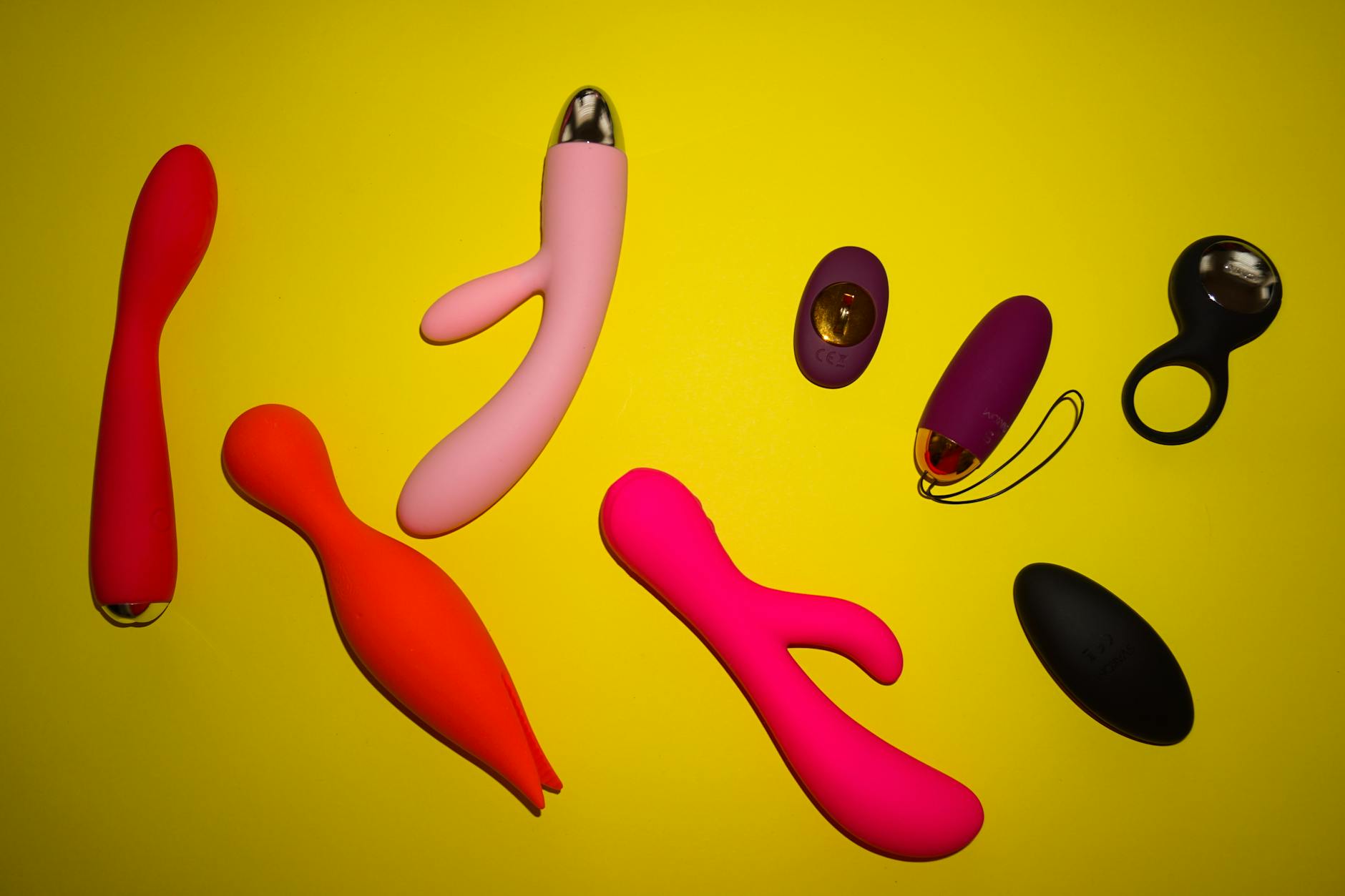
Your partner thinks toys are a referendum on them. You know a lemon vibrator is just a tool that works with your body's wiring. Those two things are living in the same sentence and making conversation impossible.
Here's what I see clinically: most "toy resistance" isn't really about the toy. It's about feeling replaced, feeling inadequate, or carrying old shame about pleasure that nobody talked about growing up. That doesn't make their resistance fair. But it does make it fixable, if you're willing to have the harder conversation first.
Why partners resist toys (and what's really going on)
There are three common narratives running underneath partner resistance, and they almost never get said out loud.
Narrative 1: "I should be enough." This one usually comes from men and stems from a decades-long cultural script that says "a good partner makes their partner come every time, without help." That script is false and impossible, but it's deeply embedded. When a partner sees a toy, they hear "I'm failing." You're not saying that. But that's what lands in their nervous system.
Narrative 2: "Toys mean you don't want me." This is about scarcity thinking. Your partner learned somewhere that pleasure is finite, that if you're getting off with a toy, that means you want them less. Objectively nonsense. Neurologically powerful. It triggers the same threat response as infidelity, even though it's the opposite.
Narrative 3: "My pleasure should be your priority." Some resistance comes from partners who learned that good sex was about being a giver and never a receiver. When you introduce a tool focused on your body's response, it suggests your pleasure matters equally. That can feel selfish to someone who built their identity on self-sacrifice.
None of those are reasons to hide what your body needs. But understanding which narrative is running underneath their resistance changes how you approach the conversation.
How to introduce a lemon clitoral vibrator when your partner is skeptical
Don't start with the toy. Start with data.
Share something like: "I've been reading about how clitoral vibrators work, and I realized my body might respond really well to suction sensation. It's not about anything you're doing wrong. It's about how my nervous system is wired." You're leading with neurology, not emotion. This is harder for a partner to take personally.
Then give them a specific role that makes them feel included, not replaced. "I want you to be here when I explore this. Not to perform, just to witness and learn how my body lights up." That's vulnerable and collaborative. It's the opposite of "I'm doing this alone, thanks."
When you first use a lemon vibrator with your partner present, start solo. Put it on the lowest setting. Let them see it. No shame, no performance. Just "Here's how this feels." The suction sensation of a device like the Lem is gentle and concentrated. Show them where you're placing it. Narrate what you're noticing: "The sensation is lower and wider than direct touch. It's building slower but differently." You're demystifying, not dramatizing.
That first time, keep expectations low. You might not orgasm. That's fine. The point is proving to your partner that this is about sensation exploration, not replacement.
The conversation that actually works
Schedule it. Don't ambush them with "We need to talk about toys" while you're both tired or distracted.
Start by validating what you know they're feeling. "I get that seeing me want a toy might have landed like I'm not satisfied with you." Then be specific about what's true: "What's actually true is that my body takes a while to respond to touch, and I want to understand that better. This isn't about you failing me. It's about me knowing myself."
Then ask the hard question: "What would make you feel less worried about this?" Listen. Some partners need reassurance that you still want partnered sex. Some need to feel included. Some need to know this isn't replacing them. Different partners need different things.
A lemon vibrator isn't threatening because of the toy itself. It's threatening because it's changing a dynamic that felt predictable, maybe safe. Your job isn't to convince your partner they're wrong to feel that. Your job is to show them a new dynamic where they still matter and your pleasure also matters.
Using a lemon vibrator in partnered sex when your partner's skeptical
If your partner has agreed to let you try, but is still uneasy, here's how to build trust through experience.
Start with your hand only. Touch yourself the way you normally would. Let them watch. This shows them that your body's pleasure isn't contingent on a toy. You don't "need" it, but you want to experiment with it.
Then introduce the lemon clitoral vibrator on the lowest setting. Place it yourself. You're in control. The message is: this is my body, this is my exploration, and you get to be part of witnessing it.
Many partners' resistance softens when they actually see what a clitoral vibrator does. The suction sensation isn't violent or frantic. It's localized and steady. It's easy to understand. Some partners get curious and want to hold it themselves (with your direction). That's a huge shift. They've moved from threat to participation.
What to do if your partner keeps resisting
There's a difference between "my partner needs time to adjust" and "my partner is controlling whether I get to know my own body."
If you've had the conversation, offered to include them, and they're still saying "I don't want you using toys," that's not about the toy. That's about control. And that's a bigger relationship issue than any lemon vibrator is going to solve.
You deserve to explore your pleasure. Full stop. If your partner can't make space for that, individual couples therapy is the move. Not because they're evil, but because this is a fixable incompatibility if both people want to fix it.
There's also a middle path: using your lemon vibrator solo while your partner adjusts. That's legitimate. Your pleasure doesn't require their permission or comfort. You can give them time and space to understand while also honoring your body's needs.
The long game: rebuilding pleasure as a team
Once your partner starts softening (and many do, once they see that toys don't replace partnership), the real work begins: showing them that your pleasure and theirs are linked.
When you know your own body through solo exploration with a lemon clitoral vibrator, you become a much better partner. You know what sensations work. You're less dependent on them to figure you out. That paradoxically makes partnered sex better because there's less pressure on them to read your mind.
Invite them into that knowledge. "When I use my vibrator, I notice my body responds to slow builds instead of fast intensity. Can we try that together?" You're bringing the data back to the partnership. You're not asking them to be more, you're asking them to be different. That's a much easier ask.
Most couples who move through this successfully end up with better sex, not worse. Because now both people understand that pleasure is about responsiveness to each other's actual nervous systems, not about performing adequacy.
People also ask
Why does my partner think a lemon vibrator means I'm not attracted to them?
Because somewhere in their history, they learned that attraction and pleasure are the same thing and that good sex means one person (usually them) creates pleasure for the other. That's backwards. Attraction is about who you want to be close to. Pleasure is about how your nervous system responds to stimulation. You can be wildly attracted to your partner and still need a lemon clitoral vibrator to reach climax. The two have nothing to do with each other. What helps: show them data. "My arousal response time is about X minutes. When I use a vibrator, it's about Y. Neither has anything to do with how much I want you." Make it neurological, not emotional.
Can using a lemon vibrator actually improve my partnership?
Yes, but only if your partner moves from resistance to curiosity. When you know your own body, you stop expecting your partner to intuit what works for you. That takes pressure off them. You also know what sensations, pacing, and touch patterns light you up, so you can guide them. That collaboration beats mind-reading every time. The vibrator itself isn't healing the partnership. Self-knowledge and communication are.
What if my partner wants to use the lemon vibrator on me but I feel uncomfortable?
That's important information. Discomfort might mean you're not ready for that level of vulnerability with them yet. It might also mean the resistance you've been picking up from them is making you tense around pleasure. Take time solo first. Use your lemon vibrator alone until you're really comfortable with your own arousal. Then invite your partner to watch. Then maybe they hold it. Slow steps build trust on both sides.
Should I hide my lemon vibrator if my partner is still opposed?
That depends on what you need. If you're using it to know your own body, solo use is legitimate even without your partner's enthusiasm. But hiding it creates secrecy, which erodes trust. Better path: be transparent. "I'm going to explore my body with this tool because it matters to me. I hope you'll come around. I'm not asking permission." Honesty isn't aggressive. It's just clear.
How do I know if my partner's resistance is about insecurity or about control?
Insecurity usually softens with reassurance and time. A partner with insecurity will worry, then watch you use your lemon vibrator, then realize it's not threatening. That shifts. Control doesn't shift. A controlling partner will say no, and when you do it anyway, they'll escalate (criticism, withdrawal, anger, accusations of infidelity). If you see escalation instead of softening, you're looking at control. That's a bigger issue than sexual communication.
What Try Lemon Vibrator knows that your partner might not
We build lemon clitoral vibrators because we know that pleasure doesn't come in one shape. Some bodies respond to deep vibration. Some respond to suction. Some respond to sustained pressure. That's not a failure of partnership. That's biology.
Your partner's resistance isn't stupid. It's just incomplete information paired with old shame. You can change that by being honest about what your body needs and by inviting them to understand it alongside you.
Start with the conversation. Then let the vibrator do the work of showing them what you already know: your pleasure is worth protecting. And you deserve a partner who gets that.