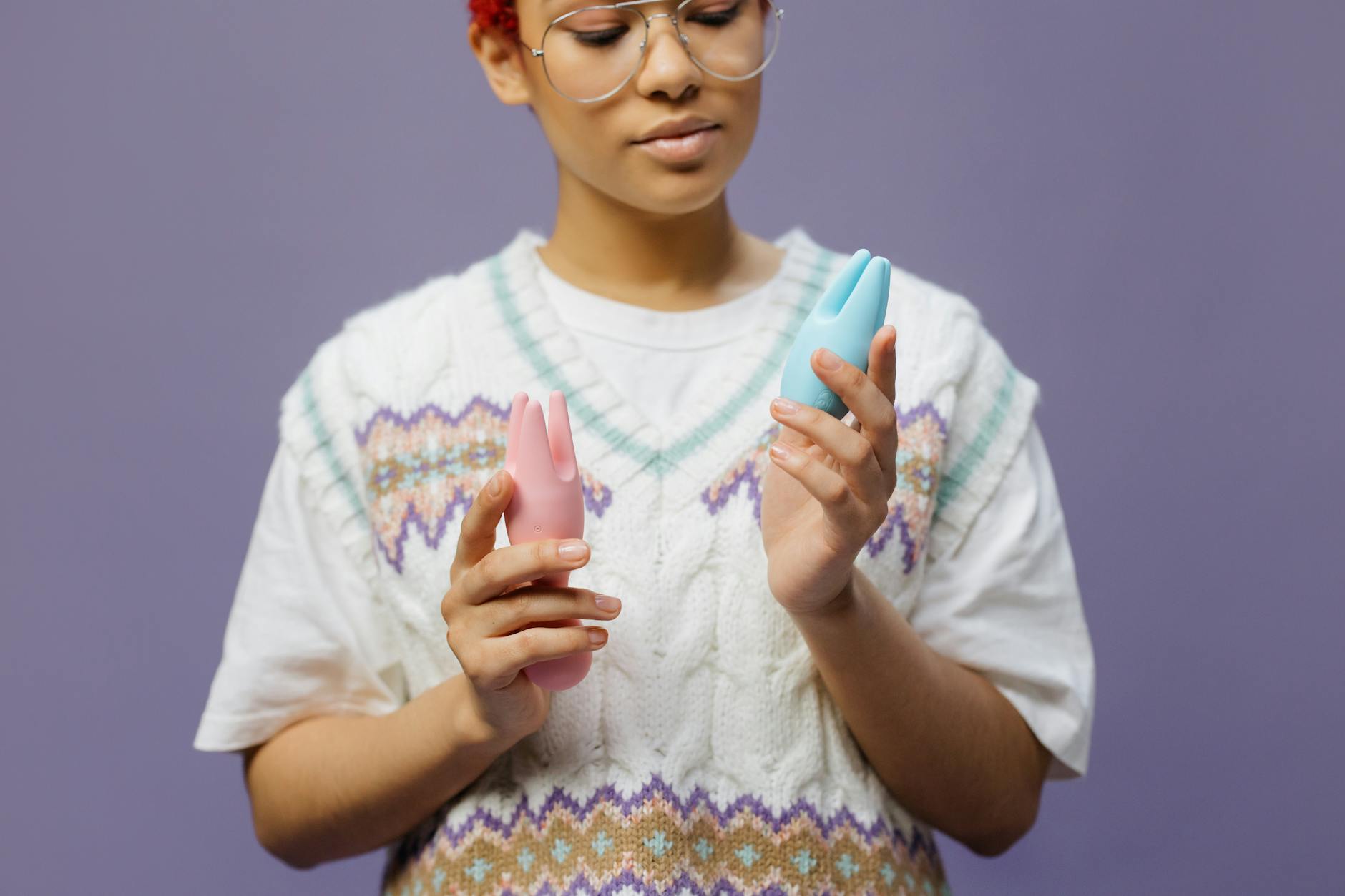
Here's what most people get wrong about vibrator settings
You bought a lemon clitoral vibrator, found the lowest setting, and thought you were done optimizing. That's like buying a stereo and only listening at volume three. The range exists for a reason—and different settings don't just feel different, they create genuinely different sensations that your nervous system processes in distinct ways.
What your body actually experiences depends on three variables: intensity (how strong the suction), pattern (the rhythm or pulse), and duration (how long you stay at each level). Stack those together correctly, and you unlock sensations you didn't know were possible. Get them wrong, and you might think a lemon vibrator isn't for you when actually, you just haven't found your frequency yet.
Why intensity matters more than you think
Let's separate intensity from speed here, because most people conflate them. A lemon suction vibrator isn't like a traditional vibrator that gets faster at higher settings. The Lem, for example, uses multiple intensity levels that change the strength and consistency of the suction pull. Lower settings (typically 1-3) create a gentler, more diffuse sensation. Higher settings (4-7) concentrate that pull more intensely.
Your clitoris has roughly 8,000 nerve endings in about a square inch of tissue. When you're using a lower intensity setting, you're spreading stimulation across a wider area of those nerves. It's still powerful—it just feels expansive rather than pinpointed. Higher intensities concentrate that sensation into a sharper, more localized peak.
Why does this matter for a lemon vibrator specifically? Because clitoral tissue is delicate. If you jump straight to settings 6 and 7 on your first try, your nervous system can interpret that as overwhelming rather than pleasurable. Your pelvic floor reflexively tenses. Arousal drops. You end the session thinking suction vibrators aren't your thing.
Start at intensity 1 or 2 and spend five to ten minutes there. Let your body acclimate. You're not trying to reach orgasm in the first few minutes—you're teaching your nervous system what this sensation is.
The role of pattern and rhythm
Most lemon clitoral vibrators don't just offer intensity changes. They offer pattern changes—steady pulses, waves, or rhythmic builds. Some people find steady settings monotonous. Others find patterns distracting. Neither is wrong.
Think about how you'd describe your ideal rhythm in any other context. Do you like a steady beat (steady pulses), or do you like something that peaks and releases (wave or pulsing patterns)? That preference probably translates directly to what works with your lemon vibrator.
Here's a practical experiment: use your lemon sucker on a steady pattern at intensity 2 for three minutes. Notice what happens in your body. Does arousal build steadily? Then steady is your friend. Does your attention drift? Try a pulsing pattern. When you layer the right pattern with the right intensity, the sensation feels intentional instead of random.
Most people don't experiment here because they assume settings are just different volumes. They're not. A pulsing pattern at intensity 3 feels completely different from a steady pulse at intensity 3—one might build arousal gradually while the other plateaus.
Duration, escalation, and nervous system response
Here's where most guides go vague: how long should you stay at each setting? The honest answer is it depends on your nervous system state that day.
When you're already aroused (say, twenty minutes into foreplay), your body's threshold shifts. Sensations that felt too intense yesterday might feel just right today. This isn't inconsistency—it's physiology. Your blood flow has changed. Your pelvic floor muscles are more engaged. Your brain is releasing different neurochemicals.
For that reason, I recommend a graduated approach: start at intensity 1 or 2 and spend 5-10 minutes building arousal. Once you feel your breathing change and your pelvic floor engage, move up a level. Spend another 5 minutes there. You're looking for the point where sensation feels pleasurable and building, not overwhelming.
If you plateau (sensation stops building), you can either increase intensity or try a different pattern. If sensation suddenly feels too much, drop back down. The goal isn't to reach the highest setting—it's to find the Goldilocks zone where your nervous system feels safe and turned on simultaneously.
Using settings solo versus with a partner
Solo use and partnered use often require different intensity strategies. When you're alone, you control the rhythm entirely—you can pause, intensify, or shift pattern instantly based on exactly what your body needs. You're also typically more relaxed, which means your nervous system might tolerate higher intensities more readily.
With a partner, the dynamic changes. You might want to start at a lower intensity so your partner can see how your body responds without overwhelming you. Some couples find that intermediate settings (3-4 on most lemon vibrators) are the sweet spot for partnered play because they leave room to escalate if desired but don't require as much adjustment as jumping straight to 6 or 7.
If you're using a lemon clitoral vibrator during foreplay with your partner, I'd recommend exploring settings beforehand solo. Know which intensity and pattern combination works for you. Then when you introduce it to partnered play, you're not simultaneously learning the device and managing a partner's presence.
The arousal-setting feedback loop
Here's something almost nobody talks about: your nervous system's response to vibrator settings changes throughout the year based on hormones, stress, and emotional state. That intensity 5 that felt perfect in January might feel aggressive in March if you're more stressed or earlier in your cycle.
This isn't a flaw in your body or the device. It's signal. If you notice that settings that usually work suddenly feel wrong, check in with yourself. Are you more stressed? Less sleep? Earlier in your cycle? Different medication? Relationship tension? Sometimes the lemon vibrator is just a precise instrument that shows you when something else in your life has shifted.
Most importantly, settings aren't a hierarchy you're trying to climb. Higher intensity isn't better—it's just different. The best setting is the one that creates pleasure and arousal right now, in this body, on this day. That might be intensity 2 today and intensity 5 next week. Both are correct.
Practical starting protocol for trying different settings
If you're new to a lemon vibrator or exploring its settings more intentionally, here's a straightforward framework:
Session one: Intensity 1 or 2, steady pattern, 10-15 minutes. Focus on noticing sensation rather than chasing orgasm. What does the suction feel like? Is it pleasant? Does your body want more or less pressure?
Session two: Same intensity and pattern, but add light lubrication (water-based). Notice how that changes the sensation. Does the sucker stay in place? Does sensation feel sharper or softer?
Session three: Intensity 2-3, same pattern. See if arousal builds faster now that your body knows what to expect. Did you need to adjust your breathing?
Session four: Experiment with pattern. Keep intensity at 2-3, try a pulsing or wave setting instead of steady. What's the difference in how your nervous system responds?
After that: You have a baseline. From here, you can explore higher intensities, longer sessions, or different combinations based on what you learned about your own preferences.
The most common mistake is thinking you need to reach a high setting to have a "real" orgasm. You don't. Some of the most intense, full-body orgasms people report come from lower intensities maintained over longer periods because the gradual build creates more nervous system engagement than a sudden spike.
When to adjust (or not)
If a setting consistently feels painful rather than pleasurable, stop and reassess. Pain isn't a threshold to push through—it's information. You might need to use lubricant, warm up longer, or check in with whether you're actually aroused enough to be exploring settings right now.
But if a setting feels intense or unfamiliar—not painful, just surprising—sit with it for thirty seconds. Sometimes our brains interpret novel sensations as "too much" before our nervous systems have actually registered them as pleasurable. That brief pause often lets sensation settle into something you actually enjoy.
Setting exploration is one of those rare moments where you get to be simultaneously the scientist (experimenting, observing, collecting data) and the subject (feeling, responding, learning). That dual role is part of what makes understanding your own pleasure genuinely empowering.
People also ask
What intensity setting should I start with on a lemon vibrator if I've never used one?
Start at intensity 1 or 2 with a steady pattern. Spend at least five to ten minutes at that level before considering moving up. Your body needs time to acclimate to the sensation and to signal whether it wants more intensity. Many people who assume lemon vibrators "aren't for them" actually just started too high and overwhelmed their nervous system.
Why does my lemon vibrator feel weaker at higher intensities sometimes?
You might be experiencing a sensation called adaptation, where your nervous system stops noticing constant stimulation over time. Try alternating between two intensity levels, or switch to a pulsing pattern to create variation. You can also pause for thirty seconds and restart—that brief break resets your nerve sensitivity and makes the sensation feel strong again.
Can I use different intensity settings for orgasm versus foreplay?
Absolutely. Many people use lower intensities (2-3) during foreplay to build arousal, then increase to 4-5 once they're already aroused and ready to push toward orgasm. Some prefer staying at one intensity throughout. There's no "correct" approach—it's about what your nervous system prefers.
Does using higher intensity settings on a lemon vibrator desensitize me over time?
Not if you vary your settings and take breaks. If you use the same high intensity every single day without variation, your nervous system may adapt and require higher stimulation to feel the same effect. Rotating intensities, using different patterns, and taking rest days actually keeps sensation fresh and responsive.
What's the difference between intensity and pattern on a lemon clitoral vibrator?
Intensity controls how strong the suction pull is—think of it like volume on a stereo. Pattern controls the rhythm or pulse—steady versus waves versus escalating builds. Both change sensation independently. A high intensity with a gentle, pulsing pattern feels very different from high intensity with a steady, constant pull.
Should I increase intensity if I'm not reaching orgasm?
Not automatically. If you're not reaching orgasm, check arousal level first. Are you genuinely turned on, or are you trying to force a response that isn't there? Try increasing duration or pattern variation before jumping to higher intensity. Sometimes a longer session with a pattern change works better than cranking intensity up.