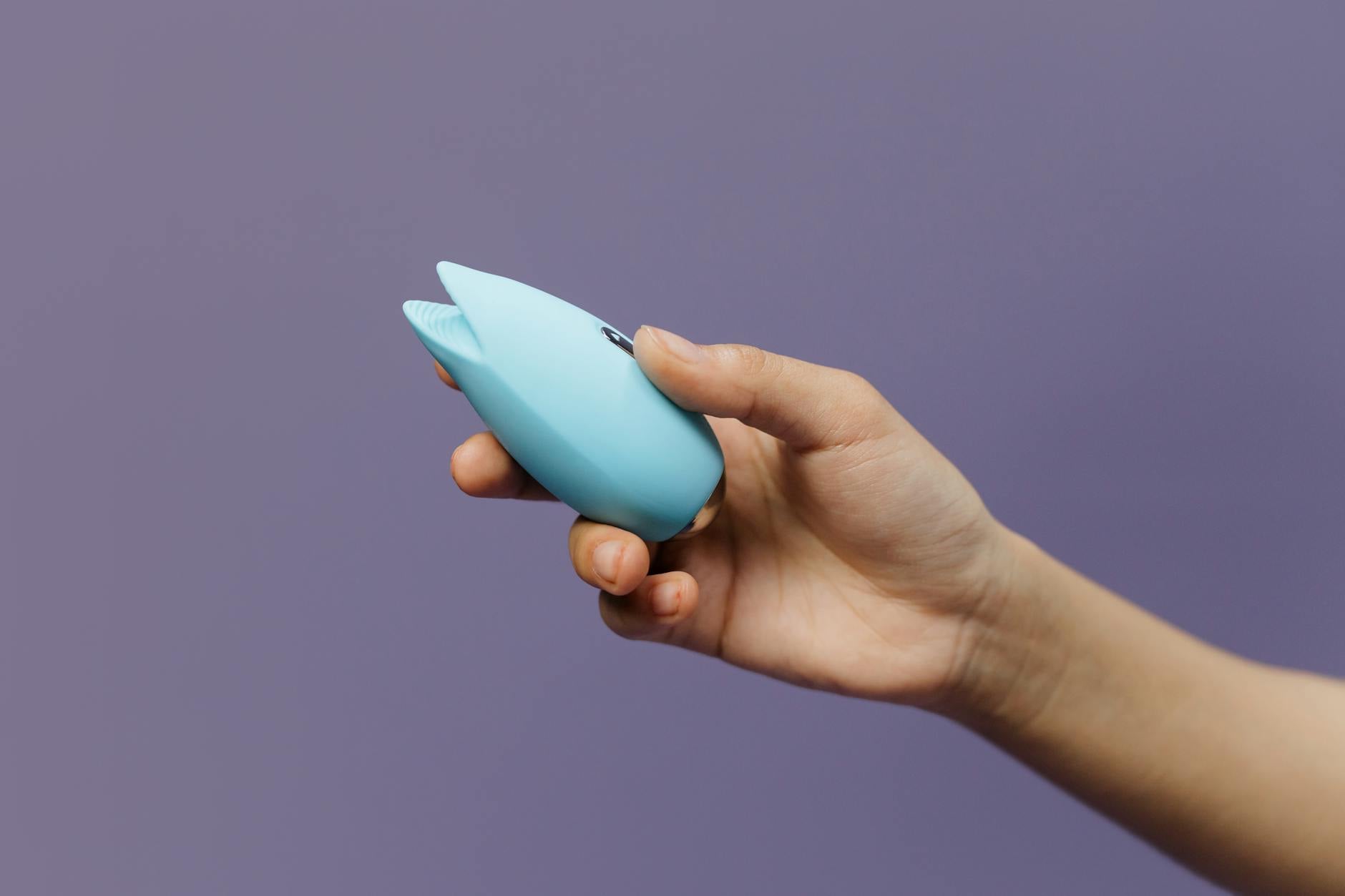
Let's talk about what "too intense" actually means
You're not alone if direct clitoral vibration feels overwhelming. For some people, the feeling is sharp, almost buzzy in a way that makes them flinch. For others, it builds too quickly to something that's more uncomfortable than pleasurable. Neither experience means your body is broken. It means your nervous system is highly responsive, and you need a different access route to pleasure.
Here's the thing nobody mentions: a lemon clitoral vibrator's suction mechanism is actually designed for this exact scenario. Most people assume suction equals intensity, but the opposite is true. Suction distributes stimulation across a wider area of nerve endings instead of concentrating it in one spot. For people with intense sensitivity, this matters hugely.
Why suction changes everything for sensitive clits
Direct vibration targets a small, concentrated zone. Your clitoris has between 8,000 and 10,000 nerve endings packed into a tiny space. Vibration hits all of them at once, which is why it can feel so sharp. Suction, by contrast, creates a gentle pulse across the entire clitoral bulb. The sensation is broader, gentler, and typically less overwhelming.
When you use a lemon vibrator on its lowest settings, you're getting rhythmic gentle suction without aggressive vibration. The pattern feels more like a soft pulling sensation than a buzzing one. This is why many people with intense sensitivity actually prefer suction toys to traditional vibrators.
There's also a practical advantage: you can start using suction without even turning the vibration on. The device itself creates a seal and applies gentle pressure. That alone is often enough for people with sensitive tissue.
Your initial setup matters more than you think
Before you even turn on the device, set yourself up for success. Positioning changes the sensation radically.
Start with the hood, not the glans. Your clitoris has a hood of skin that protects it. Most intensity happens when you apply direct pressure to the exposed tip (the glans). If direct contact feels too sharp, position the lemon vibrator slightly lower so it's stimulating the hood and the area around the clitoris, not the glans itself. This creates indirect stimulation, which feels gentler and often more diffuse.
Use a thin barrier. A single layer of underwear between you and the device softens the sensation. It sounds counterintuitive, but this small change can transform an overwhelming feeling into something that's pleasurable. Some people keep one layer on throughout their entire session.
Let arousal build first. Never start with the device when you're not yet aroused. Spend 10-15 minutes touching yourself without any toy. Your clitoris becomes slightly less sensitive once blood flow increases and arousal rises. Starting from that point of readiness makes a massive difference.
The button progression that works for sensitive bodies
Most lemon vibrators have between 7-10 intensity settings. People with sensitive clits often make the mistake of assuming they should start at level 1. But there's a better approach: start with the device powered off.
Place the lemon vibrator in position and let it sit there. No vibration, just the seal and gentle suction. Feel what that alone provides. Most people find this surprisingly satisfying. It's soothing more than intense.
Once you're comfortable (this might be 2-5 minutes), turn the device on to the lowest pulsing pattern. Not the lowest intensity setting on a continuous buzz, but the gentlest pulsing option. These patterns mimic a rhythmic breathing sensation rather than constant vibration.
Stay at this level for as long as you need. There's no rush to move up. Some sessions, you'll never go beyond level 2. That's not failure. That's knowing your body.
If you want to explore higher intensities, increase by one level every 3-5 minutes. This gradual approach lets your nervous system acclimate without shocking your system.
Breaks are not weakness, they're strategy
When you're working with intense sensitivity, longer sessions with shorter bursts of stimulation often feel better than one continuous session. Use the lemon vibrator for 3-5 minutes, then pause for 60-90 seconds. During the pause, touch yourself gently, breathe, let your nervous system reset.
This isn't about toning down your pleasure. It's about creating rhythm, which actually intensifies arousal over time. Your body anticipates the return of stimulation, which deepens your response.
Many people also find that alternating between the vibrator and manual touch works beautifully. Use the device for a minute, then switch to your fingers. The contrast actually makes both sensations feel better. Your nervous system doesn't habituate as quickly to varied input.
What patterns and settings feel best for hypersensitivity
If your lemon clitoral vibrator has multiple patterns, the pulsing or wave patterns typically feel gentler than continuous vibration. Continuous buzz is steady pressure throughout. Pulsing has a built-in break every few milliseconds, which feels less relentless.
Look for patterns labeled "pulse," "wave," "rhythm," or "flutter." Skip anything labeled "continuous," "steady buzz," or "intense." These are designed for people who need more aggressive stimulation.
The sweetness of using a lemon vibrator specifically is that it combines gentle suction with these graduated pattern options. You're never forced to choose between no sensation and overwhelming sensation. There's a whole middle ground.
Pairing techniques that reduce intensity while increasing pleasure
Here's where technique meets tool. When you're using a lemon vibrator with intense sensitivity, your hand position changes how you experience the sensation.
Light hand contact. Don't press the device firmly into your body. Use barely any pressure. Let the suction do the work. Most of the sensation comes from the seal, not from pushing harder.
Angle matters. Slight angling changes which part of your clitoris receives the most stimulation. Experiment with tilting the device slightly to different sides. One angle will feel noticeably better than others. That's your angle. Stick with it.
Kegel during stimulation. Tightening and releasing your pelvic floor muscles during vibration creates a pumping sensation. This changes how the toy feels in your body and often makes it feel less intense and more integrated. You're not just receiving; you're participating.
Breathing rhythm. I cannot overstate this. Shallow breathing intensifies sensation. Deep breathing calms your nervous system. When intensity builds, slow your breath. Longer exhales than inhales. This single shift often drops the intensity feeling by 30-40% without changing the device settings.
When to use lube, and which kind to choose
For intense sensitivity, lubrication can either help or hurt depending on the type. Water-based lube reduces friction and often makes sensation feel gentler because the toy glides instead of pulling. It's worth trying, especially around the hood area.
Silicone-based lube feels richer and reduces friction even more, but it can't be used with silicone toys like the lemon vibrator. Stick to water-based if you're using a silicone clitoral vibrator.
Don't feel obligated to use lube. Some people with intense sensitivity find lube actually makes stimulation feel less controlled because the toy moves around more. Dry application with the suction seal is sometimes more comfortable.
Red flags that mean you need a different tool or approach
If you're experiencing sharp pain rather than intensity, stop immediately. Pain and intensity are different. Intensity is feeling like "this is a lot, but I want more once I adjust." Pain is a signal that something's wrong.
Sharp pain, burning, or tissue irritation means either your sensitivity level needs more support, or you might benefit from reconnecting with your body after a longer break. Some people need more time building arousal and trust with a device before intense sensation feels good.
If numbness shows up instead of pleasure, take a break for 5-10 minutes. Your tissue might be overstimulated even if the intensity setting is low. Numbness is your nervous system's way of protecting itself. Honor that.
How to communicate this to a partner without embarrassment
If you're using a lemon clitoral vibrator with a partner, intensity sensitivity is worth mentioning directly. "I have pretty sensitive tissue, so I need lower settings and lots of breaks" is completely normal information.
Many partners actually prefer this because it gives them clarity on what feels good for you. And if your partner is less interested in using toys initially, explaining that you need specific settings and approaches removes some of the mystery. It becomes logistical rather than emotional.
What most people realize after a few sessions
Most people who start with the intensity concern eventually find a setting and pattern that works beautifully. It usually takes 3-5 sessions to calibrate. You'll figure out which pattern, which intensity level, which angle, and which pacing works for your specific nervous system.
This isn't settling for less pleasure. This is actually unlocking more pleasure because you're working with your body's sensitivity instead of against it. The session where you discover that level 3 on the wave pattern with breaks every few minutes feels incredible is the session everything clicks.
Intense sensitivity doesn't disqualify you from using lemon vibrators. It just means you get to be strategic about it. And honestly, that often leads to better orgasms, more control, and more genuine pleasure than rushing to high intensity ever could.
FAQ: Common questions about sensitivity and lemon clitoral vibrators
Why does my clitoris feel numb when I use high intensities, even briefly?
Your nervous system desensitizes to sustained high stimulation as a protective mechanism. It's the same reason you stop noticing background noise. If you're experiencing numbness, lower your intensity and take longer breaks between sessions. Numbness usually resolves within 24 hours. If it persists beyond that, give yourself a few days off from toys and return to manual touch only.
Is it normal for suction to feel uncomfortable at first?
Completely normal. Suction is a different sensation than vibration, and your body needs time to acclimate. Start with the device powered off for several sessions. Let your nervous system get used to the seal and gentle pressure before adding any vibration. Most people find suction feels more comfortable within 3-4 sessions once they're used to it.
Can I use a lemon vibrator if I have vulvodynia or other pain conditions?
Maybe, but you need to check with your healthcare provider first. Vulvodynia and similar conditions are highly individual. Some people find gentle suction helpful; others find any stimulation triggering. Don't guess. Get professional input. If you get the okay, start with the device completely powered off and go incredibly slowly.
Does the material of the toy affect how intense it feels?
Yes. Silicone toys like the lemon vibrator distribute sensation differently than harder plastics. Silicone's slight give and the way it creates a seal often makes suction feel gentler than a harder toy would. The material itself isn't the main factor, but the design matters. Suction toys generally feel less intense than direct vibrators regardless of material.
If gentle patterns work best, why would I ever go higher?
You don't have to. Some people with intense sensitivity never move beyond level 2 or 3, and they have amazing orgasms. Others find that once their nervous system adjusts over a few weeks, higher intensities start to feel good. Neither is wrong. Your pleasure goal is whatever intensity setting gets you where you want to go, not some external standard.
What's the difference between being sensitive and having a lower pleasure threshold?
Sensitivity is neurological response. A lower pleasure threshold is about how much sensation you need to reach climax. You can be very sensitive but still have a high pleasure threshold, meaning light touch triggers strong sensation but you still need time to build to orgasm. Understanding which one is true for you helps you use tools more effectively. Intense sensitivity usually pairs well with longer, gentler sessions rather than quick, intense ones.
Moving forward
Your sensitivity is not a problem to solve. It's information about how your nervous system works. The lemon vibrator is specifically designed to give you options across the sensitivity spectrum, from barely-there suction to higher intensities. Start low, stay patient, and trust that the right intensity setting exists for you. It usually does, and finding it is often the beginning of significantly better pleasure.