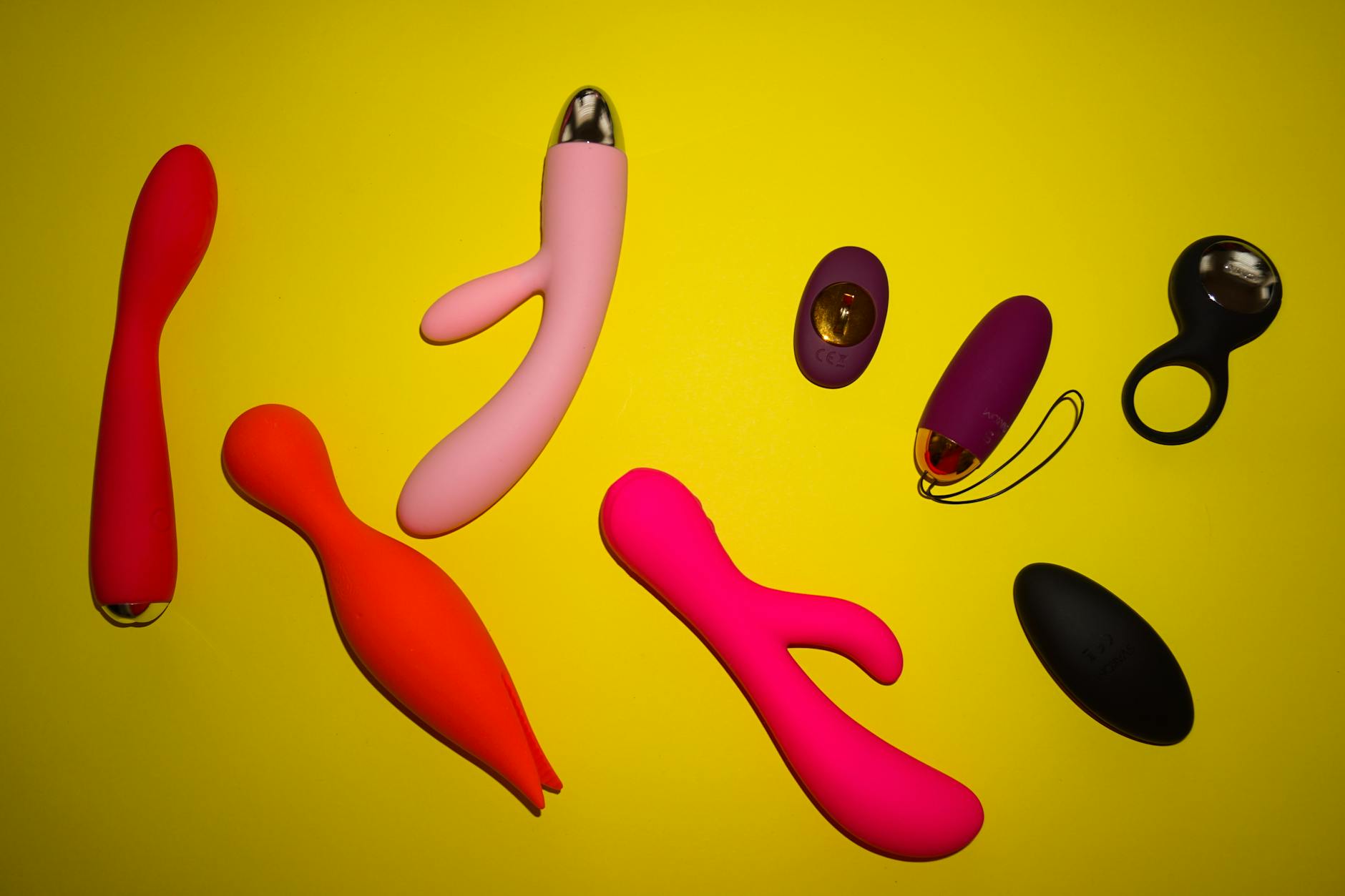
The thing nobody tells you about new relationship sex
You're attracted. You're compatible on paper. Sex is good. And yet there's this tiny voice asking: what if they judge me for what I actually want?
That voice is why a lemon clitoral vibrator sits in a drawer instead of being part of your shared pleasure. New relationships are fragile in a specific way. You're still building trust, still figuring out if this person is safe. Introducing a sex toy feels like a risk. What if they think you're needy? What if they think their touch isn't enough? What if the moment gets weird?
Here's what I've seen work after years of helping couples navigate this exact friction: the awkwardness isn't about the toy. It's about the conversation that didn't happen first.
Why new partners worry more than established ones
New relationships operate under hidden assumptions. You assume your partner knows what turns you on. You assume they'll understand why you want external stimulation. You assume they won't take it personally. None of those assumptions are grounded in actual conversation.
The other piece: you're also probably reading their body language like a lie detector. Did they flinch? Was that a micro-expression of disappointment? Are they aroused or just going along with it? Early sex is exhausting because you're performing AND analyzing simultaneously.
A lemon vibrator actually solves both problems at once. It removes the pressure from your partner to be "enough." It introduces a third element that's focused on your pleasure specifically, which shifts the dynamic from "are you satisfying me" to "here's what we're doing together."
The conversation you actually need to have
Don't lead with the toy. Lead with desire.
Pick a time outside the bedroom. Not during sex, not during foreplay, not when you're already undressing. Pick a moment when you're both relaxed and clothed. Say something like:
"I really enjoy sex with you. And I've been thinking about what I like, and I want to be honest about it. I know this is still early, but I think it matters." Then pause. Let them respond.
Then: "I enjoy clitoral stimulation a lot, and sometimes I want it to be more intense than fingers or a tongue can deliver. I have a toy that I think could be fun to explore together if you're open to it."
Notice what's happening here. You're not saying "I need this to orgasm." You're not saying "you're not enough." You're saying "here's what brings me pleasure" and "I'd like to share it with you."
Some partners will say yes immediately. Some will need processing time. Some will ask questions. "What does it look like? How does it work? Does it replace me?" Answer honestly.
The lemon vibrator specifically, and why it matters
A lemon clitoral vibrator is designed differently than a traditional vibrator. The suction motion doesn't require the same kind of focus or active positioning that a bullet or wand demands. You can be in almost any position. Your partner can be involved in multiple ways, or not at all.
For new partners, this is actually ideal. It reduces pressure in three ways:
First, it's foolproof. There's no "am I doing this right" energy. You hold it, turn it on, and it works. Your partner doesn't have to figure out the angle or pressure.
Second, it's collaborative. They can hold it for you, watch your face, touch you while you're using it. Or they can step back entirely. The toy doesn't demand anything from them.
Third, it reframes sex as exploration rather than performance. "Let's try this" is different from "I need this to come." One is a team activity. The other sounds like a failure on their part.
The actual mechanics of using it together
Start with external stimulation only. You're not jumping to penetration plus toy. That's too much new information at once.
Position yourselves so you can both see what's happening. This matters more than you'd think. Your partner gets to watch your pleasure. You get to see their response. There's less guessing, less anxiety.
Start at a lower intensity setting. Not because you need to, but because your partner is watching, and jumping straight to pattern 5 can look more intense than it feels. This removes the "oh god, is that too much?" energy.
If you're with a partner who wants to use it for you, show them the settings. Let them find what feels good. A lot of new partners actually find it hot to control the intensity while they're watching your face. It's like a volume dial on your pleasure.
If you're using it solo while they're involved in other ways (hands, mouth, inside you), just communicate. "That feels good" or "a little slower" or "don't stop." The toy doesn't silence communication. It actually creates space for more of it.
The post-sex conversation that seals the deal
After it's over, before the awkwardness settles in, say something direct: "That felt really good. I loved that you were into it." Or if they seemed hesitant, "Thank you for being open to trying that. I know it's different."
Don't over-explain. Don't apologize. Don't perform gratitude like you just did them a favor. Just name that it was good, and that they showed up for it.
If it didn't work, that's also fine. Not every toy clicks with every couple. Not every moment lands. The second time will be less weird because you've already broken the seal.
The thing about shame and new relationships
Here's what I tell people in my practice: your partner's response to your desire is actually really important information about whether you should keep dating them. If they react with judgment, mockery, or withdrawal, that's telling you something. Not everyone is right for you. Not everyone deserves access to your sexuality.
Introducing a lemon vibrator isn't asking permission to have pleasure. It's inviting your partner into it. There's a difference. One is apologetic. One is grounded.
People who love you want to see you feel good. They want to be part of that. Introducing a clitoral vibrator to a new partner isn't a risk to the relationship. Hiding what you want is.
Common things new partners worry about (and what's actually true)
"Will they think I'm not satisfied with them?" No. If you frame it as "here's what I like," most partners get it. Clitoral stimulation and penetration are different sensations. Wanting both isn't a referendum on anyone.
"What if they want to use it and I don't want them to?" You get to say that. "I love when I use this during sex with you, but I prefer it if I'm the one controlling it." Boundaries are hot, actually. They show you respect yourself.
"What if they think the lemon sucker is weird?" Some people have opinions about toy aesthetics. Who cares. It works. The design is intentional. Confidence in your choices reads as sexy.
"What if they've never used a toy before?" Explain it like you'd explain any tool. Press the button, watch what happens. Most adults figure it out in 30 seconds.
Timing matters more than you think
Don't introduce a new toy during a period where intimacy is already fragile. Not if you just had an argument about sex frequency. Not if you're both exhausted. Not if they've already mentioned feeling insecure in bed.
Introduce it during a time when sex feels good and connected. When you're both relaxed. When the conversation can breathe.
And don't introduce three new things at once. New toy is enough novelty. Save the handcuffs or the roleplay for a different conversation.
What happens after the first time
It usually gets easier. The second time, nobody's nervous. The third time, it's just part of your sex life. By the fourth time, your partner might be suggesting it.
Some new partners become genuinely excited about lemon clitoral vibrators because they get to see you respond, get to feel part of your pleasure, get to explore without pressure. The toy isn't a threat. It's a facilitator.
Others remain neutral about it, which is fine. You get what you want, they get to participate, everyone wins.
The conversation is the hard part. The toy is just the tool.
People also ask
How do I bring up sex toys without sounding needy?
Frame it around your pleasure, not their adequacy. "I've found that clitoral vibrators feel amazing for me" is different from "I need this to come." You're naming a preference, not assigning blame. Most people find that refreshingly honest, not needy.
What if my new partner says no?
That tells you something. If they're unwilling to explore your pleasure without making it about them, that's a yellow flag worth paying attention to. Good partners want their partner to feel good. They might be shy, but they're not usually hostile to the idea.
Can I use a lemon vibrator if my partner has performance anxiety?
Absolutely. In fact, it might help. Performance anxiety usually gets worse when someone feels like their touch needs to be "enough." A lemon clitoral vibrator removes that pressure entirely. You're taking responsibility for your own pleasure, which is actually hot to a lot of people. How to Use a Lemon Vibrator When Your Partner Wants Penetrative Sex But You Prefer Clitoral covers this dynamic in more detail.
Is it weird to use a lemon vibrator the first time having sex with someone?
Yes, probably. You're introducing vulnerability, novelty, and a toy all at once. Better to establish sexual comfort first, then expand. First time sex is already enough new information. Add the toy in week three, not week one.
What if they want to use it and I'm not sure I want them to?
You get to say that. Ownership of your own pleasure means you get to control how it happens. "I love exploring this, but I prefer to hold it myself" is a complete sentence. Most partners respect that.
Does introducing a lemon vibrator change the relationship dynamic?
Only if you let shame into the room. If you approach it as "here's what I like, and I trust you enough to share it," it actually deepens things. Trust is built on honesty. You're being honest. That's the opposite of a threat.