
Let's start with what you've probably noticed
You turn on your lemon vibrator. Nothing. You wait a few minutes, use some lubricant, let your body warm up. Suddenly the exact same setting feels twice as intense. Same toy, same button, completely different sensation. It's not in your head. There's genuine neuroscience happening.
Most people assume their vibrator is broken or they're using it wrong. In fact, your body is doing exactly what it's supposed to do. Arousal rewires sensitivity. Understanding why makes you a far smarter user of clitoral vibrators, and it unlocks a whole strategy for deepening pleasure.
How blood flow transforms sensation
When you're not aroused, your clitoris is resting. The tissue is compact, the blood vessels are doing baseline circulation. It's there, it's functional, but it's not in high alert.
As arousal climbs, your nervous system triggers vasocongestion. Blood rushes to the genital tissue. Your clitoris swells slightly, the glans becomes more exposed, and the surrounding tissue becomes more responsive to pressure and vibration. This isn't metaphorical. It's measurable.
That swelling changes everything about how sensation travels. A vibrator or lemon suction toy working on engorged tissue has more surface area to stimulate and more nerve endings activated per stroke. The same 60 Hz vibration pattern hitting non-aroused tissue versus fully aroused tissue feels wildly different.
This is why starting at a low intensity feels like nothing, then cranking up to medium ten minutes later feels like the toy has suddenly upgraded itself. Your body's neural response has heightened, not the toy.
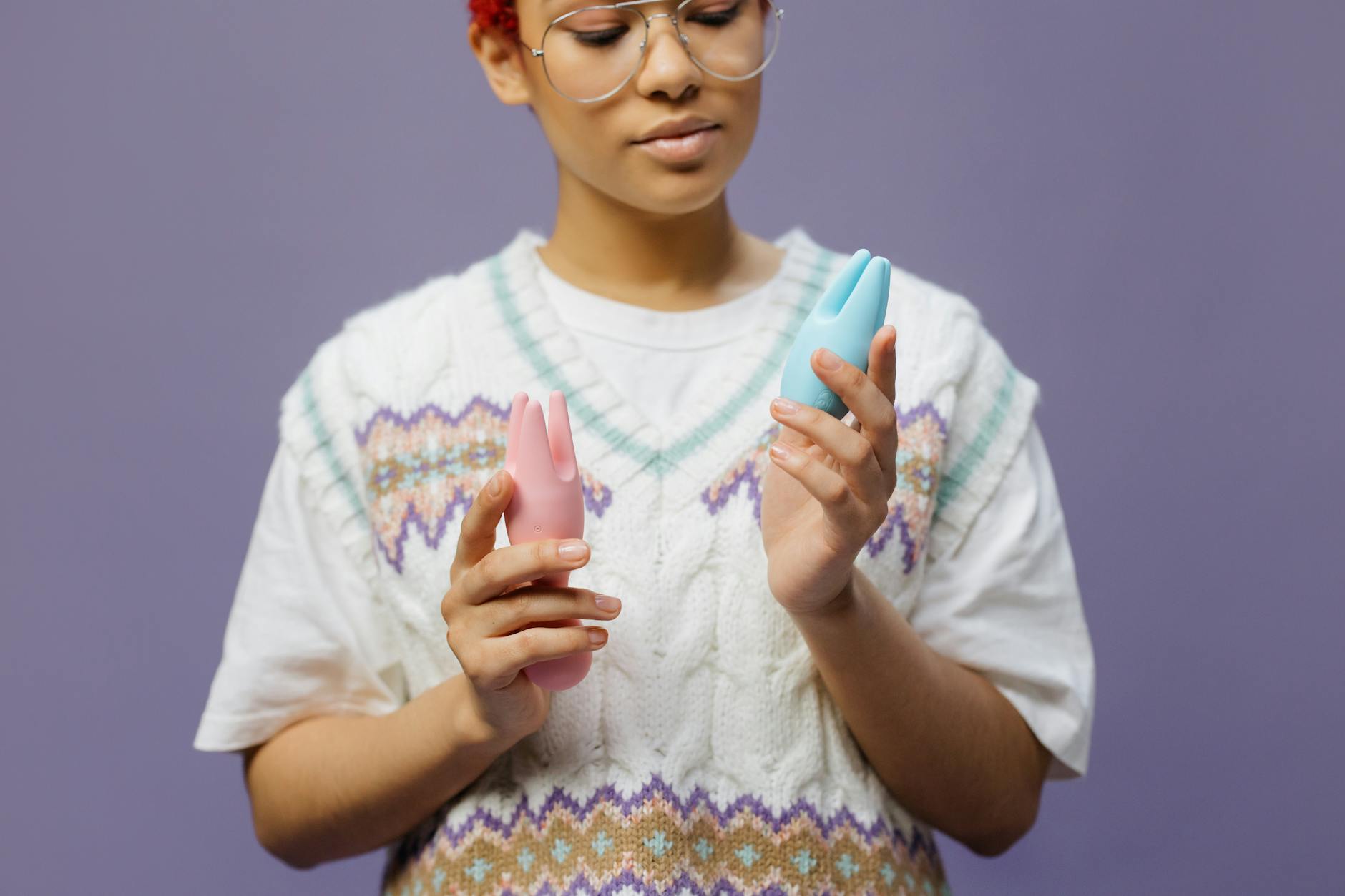
Photo by cottonbro studio on Pexels
Nerve sensitivity and the arousal curve
Here's where it gets interesting. Your clitoris has around 8,000 nerve endings concentrated in a tiny area. These nerves aren't equally active at all times. They're modulated by arousal state.
In the early stages of arousal (what researchers call "plateau phase"), sensory thresholds actually go down. That means you need less stimulation to register sensation. But sensitivity doesn't peak until you're deep in arousal. The closer you get to orgasm, the more heightened the nerve response becomes.
This is counterintuitive to how most people use vibrators. They start intense and stay intense. But if you work with arousal instead of against it, you can use a lower intensity setting for longer and actually reach deeper, more satisfying orgasms. The sensation intensifies as you warm up, so you don't need to start aggressive.
Why suction feels different than vibration at different arousal levels
Lemon vibrators and clitoral suckers work through sustained pressure plus pulsing movement. Unlike traditional vibrators that rely purely on oscillation, suction creates a seal and rhythmic pressure changes.
When tissue is less engorged, suction can feel less responsive. The seal isn't as tight, the pressure differential doesn't register as strongly. But as you become more aroused and tissue swells, that same suction intensity suddenly has more tissue to engage. The sensation magnifies not because the toy is doing more, but because your body is more receptive.
This is actually why many people prefer suction-based toys like the Lem once they understand the arousal curve. You can start gentler and let sensation build naturally. With traditional vibrators, you're often locked into an intensity level and forced to stick with it or jump settings.
The role of myotonia and muscle tension
Arousal doesn't just fill tissues with blood. It also triggers involuntary muscle tension throughout the body. Your pelvic floor muscles tighten, your leg muscles tense, even your arms and neck get involved. Sexologists call this myotonia.
That muscle engagement changes how vibration registers in your nervous system. Tense muscle responds differently to oscillation than relaxed muscle. As myotonia builds, the vibrations and suction patterns you're feeling get filtered through increasingly taut tissue, which amplifies the signal your brain receives.
This is also why taking a breath and consciously relaxing between intense moments can sometimes reset sensitivity. Releasing that muscular tension briefly then rebuilding it creates a wave pattern that many people find more satisfying than steady-state pressure.
Building arousal strategically for stronger sensation
If you understand that sensation intensifies with arousal, you can engineer your sessions to use that progression.
Start five to ten minutes before using your toy. Touch yourself, let your mind wander into fantasy, watch or read something that engages you. When you finally pick up your lemon vibrator, start at intensity level one or two. Spend time there. Your body is warming up, blood is flowing, tissues are beginning to swell.
After five minutes, move to level three or four. You'll notice the difference immediately. It won't feel like the toy changed. It'll feel like your body woke up. Continue building slowly. Each increment up in intensity will feel more dramatic because your nervous system is more activated.
The benefit of this approach: deeper sensation, longer arousal phase, and often more intense orgasms. You're not fighting your body's natural response curve. You're following it.
Plateau, orgasm, and what happens after
Once you reach orgasm, sensitivity drops sharply. Your clitoris becomes touch-sensitive in an uncomfortable way, your nervous system downregulates rapidly. This is why many people want to stop immediately after orgasm. Your body is literally telling you to stop.
But if you understand this is a neurological response, not a sign you're broken, you can work with it. Some people find that stopping vibration for 30 seconds, then resuming at a lower intensity, allows them to reach multiple orgasms. Others find that the first orgasm is enough and want to rest. Both are completely normal.
This is also where how your lemon vibrator feels different before and after orgasm comes into play. The same toy at the same setting will feel unbearably strong immediately post-orgasm and then gradually more pleasant as your nervous system restabilizes.
Medication and arousal intensity
One complication: some medications flatten the arousal curve entirely. Certain antidepressants, blood pressure medications, and hormonal contraceptives can blunt vasocongestion. If you're on medication and notice that vibrator sensation never seems to intensify no matter how much time you spend warming up, that's a common side effect. It's not your fault, and there are specific strategies for working around medication effects on orgasm.
The quiet part people don't talk about
Most pleasure guides tell you to "get yourself warmed up" and leave it at that. They skip the actual mechanism, which means you're left guessing whether you're doing it right.
You are. Arousal is a physical state with measurable changes to blood flow, nerve sensitivity, and muscle tension. Every minute you spend warming up before using your toy isn't wasted time. It's foundational. Your nervous system is preparing itself to register sensation more acutely. Your body is literally becoming more capable of pleasure.
That's not a nice idea. That's neuroscience.
People also ask
Why does my lemon vibrator feel weak at first?
Tissue engorgement takes time. In the first few minutes of arousal, blood is still flowing into genital tissue and your clitoris is still swelling. The full nerve response isn't active yet. That's not a sign the toy is too weak for you. It's a sign your body needs more warm-up time. Try spending 10 minutes on foreplay before turning on your vibrator. You'll notice an immediate difference in how intense even low settings feel.
Can I start at a higher intensity and skip the warm-up?
You can, but you'll get less sensation, not more. If you skip arousal and jump straight to intensity level 5, you're hitting non-engorged tissue with high vibration. It can feel numb or uncomfortable. If you start at level 2 and build arousal for 10 minutes, then move to level 5, the sensation will be dramatically stronger. The same intensity setting feels more intense on aroused tissue because there's more tissue to stimulate and more active nerve endings.
Does this mean I take longer to orgasm than other people?
No. The arousal curve is universal. Everyone's clitoris swells with arousal, everyone's nerve sensitivity increases as they warm up, everyone's myotonia builds. The speed of your arousal curve depends on your specific body, your stress level, medications, sleep, and mental focus. But the process itself is the same. If you feel like you need "a lot" of warm-up time, you're not slow or broken. You're normal. Most people skip the warm-up entirely and then wonder why sensation feels muted.
Why does suction feel different than vibration as arousal builds?
Suction works by creating a seal and pressure differential. With less tissue engorgement, the seal is weaker and the sensation is less pronounced. As you become more aroused and tissue swells, the seal becomes tighter and more responsive. The same suction intensity at low arousal might feel subtle. At high arousal, it feels intense. Vibration also intensifies with arousal, but suction tends to show the difference more clearly because it depends on tissue volume for the seal to work.
What if my lemon vibrator never feels more intense even after a long warm-up?
That could be a few things. Hormonal medications, certain antidepressants, and fatigue can all flatten the arousal curve and reduce vasocongestion. If you've ruled out medication side effects and you're getting adequate sleep, try extending warm-up time to 15 or 20 minutes and experiment with different fantasy or visual content. Sometimes mental arousal takes longer to build. If sensation still doesn't intensify, talking to a healthcare provider about whether any medications might be affecting your response is worth doing.
Is it normal for my partner's touch to feel different in intensity than my vibrator?
Completely. Your partner's hands can adjust pressure, rhythm, and intensity in real time based on your responses. A vibrator runs at a fixed frequency. But the underlying principle is the same. Human touch feels more intense as you become more aroused because tissue swelling and nerve sensitivity increase. The difference is that a partner can respond to that changing sensitivity dynamically, while a toy can't. This is actually why many people use vibrators solo and prefer partnered touch during sex with a partner. They're different modalities with different strengths.
Your body isn't failing you when a toy feels subtle until you've warmed up. Your nervous system is working exactly as designed. Arousal builds sensation methodically. The longer you spend in that building phase, the more acutely you'll feel vibration and suction. That's not a bug. It's the feature. Once you understand it, using a clitoral vibrator becomes less about chasing the strongest setting and more about working with your body's natural response curve. And that usually means better orgasms.
Want more specific strategies for your body? Reach out and let's talk.